A practical guide to live and software-run tables, Australian online rules, common formats, and what game odds can—and cannot—tell you.
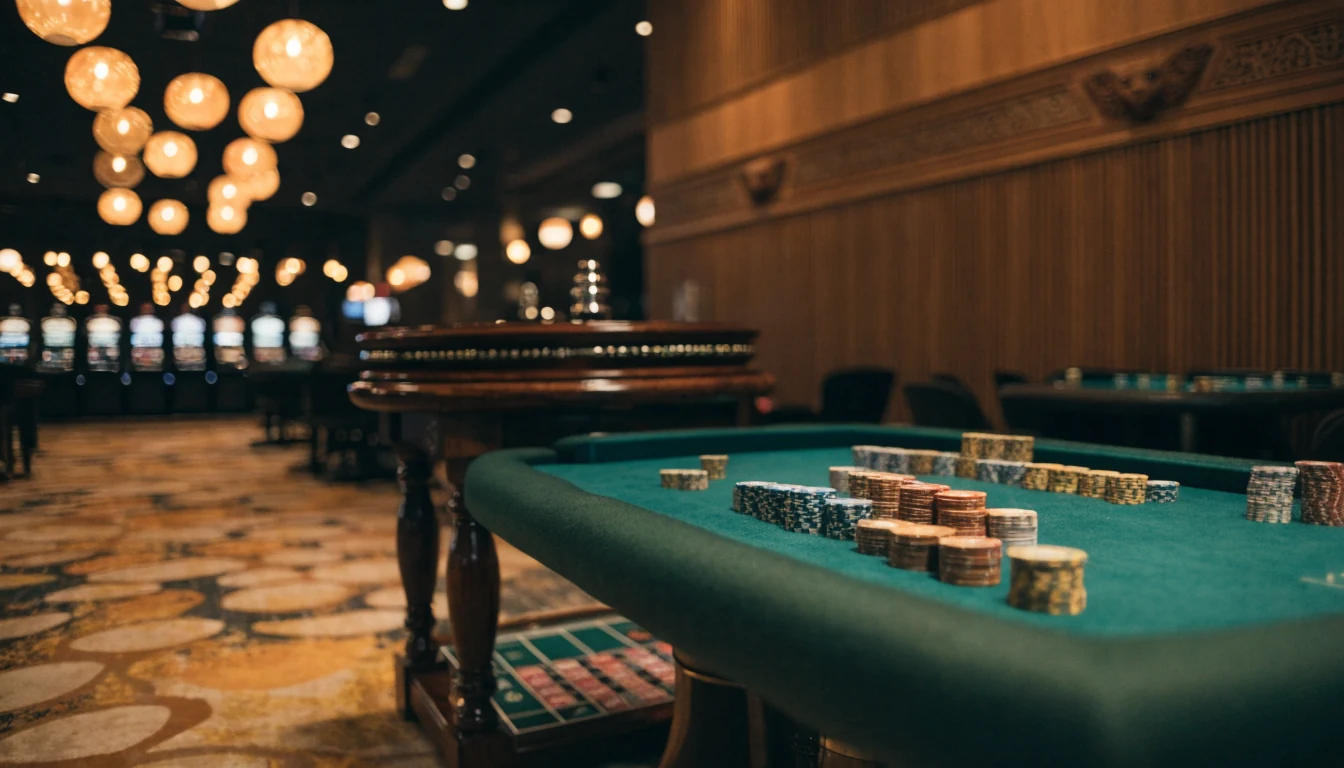
A casino table game is a game organised around a table or a table-like digital layout, where players take part in a shared format and outcomes depend on the play or the result being wagered on. The label covers more than one way of presenting a game, so “table game” does not automatically mean you are watching a dealer in a room.
The distinction I keep coming back to is whether the game is being run with real equipment or simulated by software. In a live dealer format, a real dealer operates real casino equipment, and a live video stream carries the action to players. You are watching an actual table through a screen, rather than seeing a computer-generated representation of one. The stream is the delivery method; the dealer and equipment are part of the real game.
A digital table game works differently. It uses software to produce the result. For example, a Random Number Generator, or RNG, can determine which cards are dealt or where a roulette ball lands in the simulated game. The screen may borrow the look of a felt table, but that visual design does not make it a live table. The result comes from the software.
That difference matters when you are trying to understand what a site means by “live” or “digital”. “Live” refers to the real dealer and equipment being streamed. “Digital” refers to the game being run by software. Neither label, by itself, tells you how easy a game is to follow or whether you will enjoy it. It just tells you how the game is presented and how its outcome is produced.
I used to treat a familiar table layout as proof that I understood what was happening behind it. That was a lazy shortcut. A digital game can look like a physical table, while a live game can arrive on your screen with much of the room out of view. The appearance is not the useful part; the production method is.
 Pokies & Games: Slots and Online Casino TopicsBrowse coverage of reel formats, volatility, bonus buys, live play, payouts, keno and casino searches by Australian city or state.
 7-Reel Slots in Australia: Rules and RTPLearn what a seven-reel label does—and doesn't—tell you, how to check a game's rules and RTP, and why each spin is independent.
So when someone asks what counts as a casino table game, the short answer is a game built around a table format, offered either with a live dealer and real equipment or as a software-driven version. The words can sound interchangeable on a page, but they describe different setups. Once you notice that, descriptions of table games become easier to read without mistaking a polished interface for a real table.
The legal starting point is the Interactive Gambling Act 2001, usually shortened to the IGA. It sets the rules for online gambling services in Australia, including casino-style games offered for money. The key point is about the provider: an operator cannot lawfully offer real-money online casino games to people in Australia simply by putting the tables on a website or app.
Section 5 is part of that framework. It prohibits operators based in Australia from providing real-money interactive casino games to residents. The rule covers the service being offered, not just the name attached to a table. Whether the screen shows a card game, a wheel or another casino format, putting it online does not take it outside the IGA’s scope.
That distinction matters because “online” can sound like a location with no rules. It is not. Australian gambling law treats online casino-style services as a regulated legal issue, and the IGA is the central federal law for this part of the market. In plain terms, local companies cannot run an online casino for real-money play by customers in Australia.
The Act is also relevant to services offered to people physically located in Australia, not only to businesses with an Australian office. An overseas address does not, by itself, make the legal question disappear. The framework prohibits the provision of real-money online casino games to people in Australia; it is not a general permission for an operator to serve Australians from elsewhere.
Legal Prohibition
Under the Interactive Gambling Act 2001, it is prohibited for operators to provide real-money online casino games to people in Australia.
I have learned not to let a polished site design do the thinking for me. A professional-looking table, familiar wording or a claim about where a business is based does not change what the law says about providing the service. The legal test is about the service and the people it is offered to, rather than whether the operator’s marketing makes it appear local or international.
The Australian Communications and Media Authority, or ACMA, is responsible for enforcing compliance with the IGA. Its role includes taking action against unlicensed domestic platforms and blocking access to them. That is enforcement, not a recommendation or approval of other sites. A platform being visible at a particular moment does not establish that it is lawful, authorised or safe to use.
It helps to keep three things separate: the rule in the Act, ACMA’s enforcement role, and what a person happens to see online. The Act sets the restriction on operators; ACMA enforces it; and the appearance of a website does not override either. The internet can make a service feel informal, but the legal framework does not depend on how casual the interface looks.
This is why searches for real-money table play can lead to a confusing mix of pages and claims. Some may describe online casino tables as if they were ordinary entertainment products, while the Australian law treats the provision of real-money casino games to people here as prohibited. That legal status applies to casino table games online just as it does to other online casino-style games. The phrasing on a page cannot turn a prohibited service into a permitted one.
 3-Reel Slots in Australia: Features, RTP and PlayExplore bonus mechanics, RTP limits, paytables and play options. One review describes four or more scatters awarding ten free spins, but versions…
 Best Pokies in Tasmania: How to Check a VenueLearn how to check official venue updates and call to confirm whether the gaming area is operating. The guide also covers access,…
The distinction is about real-money provision. It should not be stretched into a claim that every screen depicting a table game has the same status: the legal issue described here is an operator providing real-money interactive casino play to people in Australia. Nor does a label such as “free” settle every question about a particular service. The IGA framework is the right context for understanding why online casino-style games are treated differently from ordinary web content.
ACMA’s blocking work is one visible part of enforcement, but blocking is not a certificate for everything that remains reachable. Access and legality are separate questions. A page loading successfully is only a technical fact; it does not show that the operator is permitted to provide real-money casino games to people in Australia.
I would be wary of any explanation that turns this into a simple story about an overseas address making an online casino acceptable. The relevant Australian rule is not that local companies are restricted while every foreign operator is free to serve the country. The IGA framework prohibits real-money online casino services for people in Australia, and ACMA has an enforcement role. That is the essential legal picture. No sales pitch needed.
The phrase “bitcoin table games” can make it sound as if Bitcoin changes the game itself. It doesn’t. A payment method and the process that determines a game’s outcome are separate things. If an online table game uses software to deal cards or place a roulette ball, a payment label does not change what that software does.
A payment method like Bitcoin is separate from the process that determines a game's outcome; it does not change the game rules or the software used.
That distinction is easy to lose when a page puts “BTC” beside familiar casino language. The table may be presented as a bitcoin option, but the word describes the payment angle, not a different set of rules or a special way of dealing. The same applies when you compare bitcoin table games with tables associated with conventional money: the meaningful question about the outcome is how the online game determines it, not which currency name appears beside it.
For online versions, a Random Number Generator, or RNG, determines which cards are dealt or where the roulette ball lands. That is the mechanics point worth keeping in view. Bitcoin is not the dealer, and it does not tell the RNG which card or number to produce. Neither does the word “regular” explain the game mechanics; it usually just marks the contrast a reader is trying to make between payment options.
I used to read payment labels as if they told me more about a game than they actually did. They don’t tell you what happens at the table. They tell you what the site is choosing to emphasise about money. Keep those two questions apart and the comparison gets less foggy.
There isn’t a sound way to name the best bitcoin casino table games just from the fact that Bitcoin is mentioned. A currency label cannot establish which table is best, and it cannot show that one game has better odds than another. Those are different claims about game rules and mathematical features. They need game-specific information, not a payment method in the heading.
 Mines Casino Game in Australia: Key ChecksLearn why a “slot” label does not prove a traditional pokie, and what demo play, bonus terms and cashout conditions can—and cannot—tell…
 Choosing the Best Pokie Machine in AustraliaLearn how the Interactive Gambling Act 2001 applies to online pokies, what features and RTP reveal, and why an offshore site is…
So if you’re trying to find the best table games in a casino by searching for Bitcoin, take the wording literally only as a hint about the payment topic. It is not evidence that a game is different, that its outcomes work differently, or that it offers better chances. I wouldn’t treat “top” or “best” as a useful verdict unless the page gives a clear basis for the comparison. A shiny label is not a comparison.
The same caution applies to “casino table games for Bitcoin” or “BTC casino table games.” Those phrases can group games by a payment-related theme, but they do not identify a special category of table mechanics. Whether someone is looking at a felt tabletop game or a digital one, the important question is still what determines the outcome. For an online software version, that is the RNG.
A bitcoin label alone does not tell you how a particular site handles a payment, what conditions apply, or whether a table is suitable for you. I’m not going to fill those gaps with guesses. Nor does the phrase “casino table games open” tell you anything about a game’s mechanics; it’s simply a broad way people may look for tables they can access.
If you are comparing a bitcoin-themed table with what someone calls a normal casino table, keep the comparison narrow: the currency wording does not alter the RNG’s role in an online game. Don’t let the payment label stand in for information about the actual game. Separate the two, and the claim becomes easier to judge.
The word “online” can describe two quite different ways of presenting a table game. One uses a dealer and physical casino equipment, with a live video feed. The other is a digital game in which software determines the outcome. The screen may look similar at a glance; the process behind it is not.
In a live-dealer format, a real person handles the game using real equipment, and the action is streamed to viewers. You watch the table through video rather than seeing a fully computer-generated scene. The dealer and equipment are physical; the stream is what brings that table image to the screen.
A software-based version works differently. A Random Number Generator, or RNG, determines outcomes such as which cards are dealt or where a roulette ball lands. The displayed table is digital, and the result comes from the game software rather than a live dealer handling equipment in front of a camera. A convincing animation does not, by itself, make a game live.
That distinction is the useful starting point if you are trying to understand how online table games work. Look at what produces the outcome, not just at the graphics. A video window showing a dealer and physical table points to a live stream. A digital table with software-generated results is the other format. Neither label tells you, on its own, whether a game is available to you or what conditions apply.
 Crash casino games in Australia: what to knowLearn how crash games differ from pokies, what offshore play and crypto withdrawals can involve, and why game rules matter more than…
 Casino in Melbourne: hotels, dining and visit planningCheck hotel location and booking terms, then verify parking, dining, opening hours and on-site amenities before making plans.
“Free play” needs the same care. The phrase suggests a way to experience a game without wagering real money, but it does not identify whether the game uses a live stream or RNG software. Nor does the label alone establish that a free mode is offered, how it works, or whether it matches the real-money version in every respect. I’ve learned not to treat a familiar label as a full explanation. Read what the mode actually says before assuming what it means.
If you are learning the interface, keep the question narrow: are you watching a live dealer, or looking at a software-rendered game? That tells you how the outcome is produced. It does not teach the rules of a particular game, and it does not make one format a better choice. Those are separate questions.
Searches for popular games or the best tables can blur these distinctions. Popularity does not tell you whether a game is streamed or generated by software, and “best” has no fixed meaning without knowing what you value. For a basic orientation, the format is more concrete than the sales language: real dealer and equipment on one side, RNG-determined outcomes on the other.
No magic label. Just different mechanics.
When you’re trying to find a casino with table games nearby, the useful answer depends on where you are—and on whether the place actually has the games you’re looking for. I can’t identify Australian locations that have casinos or table games, or recommend a particular venue. So I won’t dress up a general search result as a checked local guide.
Attention A website loading successfully or a venue listing appearing in a search does not confirm that the operator is lawful or that table games are currently available.
That distinction matters. A place described as a casino may not necessarily have the table-game options you expect, and a listing alone doesn’t confirm what is available there now. The phrase “table games available” can sound definite while leaving basic details unresolved: which games are offered, whether the tables are operating, and whether the information is current. I’d want those points confirmed directly before making plans. Not a small detail.
There is also a difference between looking for a physical venue and looking for a game online. They are separate questions, even when both searches use words like “casino” and “table games.” Online availability doesn’t establish that a casino is nearby, and a local venue listing doesn’t tell you whether its tables are open or which games it offers. Mixing the two can lead to an answer that looks relevant but doesn’t answer what you meant.
If you’re searching around a specific town or suburb, treat the result as a starting point, not confirmation. Check whether the information refers to a physical venue, whether it names table games rather than casino entertainment in general, and whether the details come from a current source. If the listing is vague, it’s reasonable to contact the venue and ask what is actually available. That’s less satisfying than a neat map pin, but more useful than travelling on an assumption.
Searches mentioning places outside Australia can create another kind of mismatch. A result for a city overseas doesn’t tell you what exists near you in Australia, and a phrase such as “new casino” doesn’t, by itself, establish that a new venue has opened or that it offers table games. Location and current details matter; the wording of a search result is not evidence.
I’ve learned to be wary of confident labels that skip the practical question. “Near me” is personal, and “table games” needs confirmation. Without a reliable location and current venue information, naming a nearest casino would be guesswork. I’d rather leave that blank than point you toward a place I can’t verify.
Table games do not all ask you to do the same thing. Some put your hand against a dealer’s; others centre on a bet about a hand, a dice roll or the cards players can build. That difference matters more to the feel of a game than a glossy label does.
Blackjack is the clearest player-versus-dealer example. You compete with the dealer, aiming for a hand value closer to 21. The contest is direct: your hand is measured against theirs. I used to hear “simple” and assume that meant every decision would feel obvious. It doesn’t. The format is easy to describe, but the moment-to-moment choices are part of the game.
Another card-table format lets you bet on your hand, the Banker’s hand or a tie. Here, your wager is about which outcome you expect, rather than building a hand in competition with the dealer in the same way as blackjack. “Straightforward” is the sales word; the practical distinction is what your bet is attached to.
A player-versus-dealer contest where the aim is to get a hand value closer to 21.
A game where you bet on the player's hand, the Banker's hand, or a tie.
Games centered on the roll of a pair of dice and a wager tied to the outcome.
A contest where players compete to assemble the strongest possible hand.
Dice games shift attention from cards to a roll. Players roll a pair of dice and bet on the outcome. The basic shape is easy to picture: a pair of dice, a result, and a wager tied to it. I find that useful as a broad distinction, without pretending that every dice table has identical rules or betting options.
Poker is built around making the best possible hand. Players compete to assemble stronger hands than the others at the table. That gives it a different social shape from a player-versus-dealer contest or a bet on a particular outcome: the other players are part of the contest. The broad aim is clear, even if the details depend on the specific game.
These formats also explain why a single “best table game” answer is usually more slogan than help. If you like a direct contest against a dealer, blackjack has that structure. If you prefer placing a wager on a hand or tie, that is a different kind of decision. Dice play centres on a roll, while poker centres on comparing hands between players. None of those descriptions says which one you should enjoy; they tell you what you are actually sitting down to do.
I’ve learned not to trust a label like “easy” as a substitute for understanding the setup. Start with the shape of the play: who or what your bet is against, and what outcome matters. Then the game’s own rules can fill in the rest. No magic category.
Blackjack and baccarat are both card-table games, but the basic decision in each is framed differently. In blackjack, you are competing against the dealer: the aim is to finish with a hand value closer to 21. In baccarat, the bet can be on the player’s hand, the Banker’s hand or a tie.
That is the useful distinction. Blackjack is about comparing your hand with the dealer’s; baccarat gives you a choice of which result to back. I used to lump card games together as if the same sort of play sat behind all of them. It doesn’t.
The central contest in blackjack is direct. Your hand is measured against the dealer’s, and the closer value to 21 is the target. That gives the game a clear opponent and a clear reference point, even if the actual decision-making can feel less obvious once you are at the table.
I wouldn’t read more into that basic description than it says. It explains what the contest is, not a full set of rules or a guide to every possible decision. If you are comparing casino card-table games, start with that simple point: blackjack is not a bet on which of several named hands will win. It is a contest between your hand and the dealer’s.
Blackjack is a direct competition against the dealer to reach a specific value, while Baccarat involves choosing which of several possible outcomes (Player, Banker, or Tie) will win.
Baccarat is the card game associated with bets on the player’s hand, the Banker’s hand or a tie. The choice is about which of those outcomes you are backing. That makes the betting structure easy to distinguish from blackjack’s player-versus-dealer contest, even though both are played with cards.
The label “simple” can be slippery. Knowing the available bets tells you what you can back; it doesn’t tell you how a particular game handles every detail. I’d keep the description there rather than assuming that a short summary covers the full rules.
When I look at table card games, I try to separate the aim from the surrounding noise. Blackjack means trying to get closer to 21 than the dealer. Baccarat means choosing between the player’s hand, the Banker’s hand or a tie. Those are different ways to frame a card-game bet, not interchangeable names for the same kind of play.
No mystery. Just different contests.
Roulette has several versions, but the main wheel formats are European, French and American. The difference to keep in view is the number pockets on the wheel: European and French roulette have a green zero, while the American wheel has both a green zero and a green double zero.
European and French roulette each have 36 numbered pockets, plus the green 0. The American layout includes those same green pockets and adds 00. That extra pocket is the structural distinction; it is easy to overlook when the tables look familiar.
I used to treat the names as decoration and focus on the felt and the layout. Not the best way to compare them. Look at the wheel itself, especially the green pocket or pockets, and you can tell which format you’re facing.
The labels can also make the options sound more different than they are. For this basic comparison, European and French roulette share the same stated pocket count and green-zero arrangement. American roulette is the one with the additional green double zero. That is the clear difference in wheel structure.
When you see “classic” or “premium” attached to a roulette table, those words don’t tell you how many pockets are on its wheel. The format name does. Check whether it says European, French or American, then confirm the zero and double-zero pockets on the displayed wheel.
This is a narrow point, but a useful one if you’re trying to understand different roulette tables without getting pulled into promotional language. The names tell you the format; the pocket layout shows the distinction. European and French share one arrangement, while American roulette has an extra green pocket.
No need to make it grand. Count the green pockets.
Poker’s central idea is simple to state: players try to build the best possible hand. That aim gives the table its tension. You are not just watching cards appear; you are measuring your hand against the hands other players are trying to make.
I like that the objective is clear even when the game itself can feel hard to read. “Best hand” sounds straightforward, but it does not tell you what anyone else is holding or how their hand compares with yours. That uncertainty is part of the contest, not a promise that skill or luck will always go your way.
When people talk about poker table games at a casino, they may mean different formats. The shared idea, as far as the basic description goes, is the effort to form the strongest hand. That is enough to distinguish poker from games centred on a dealer hand or a bet on a particular outcome, without pretending all poker tables work the same way.
I would be wary of treating a broad label such as “casino poker” as a full explanation. It tells you the general aim, not the details of a particular table. The name alone does not explain how hands are formed or how a round is settled, so those details should not be guessed at.
At its simplest, poker is a face-off over hand strength. Players compete to put together the best possible poker hand, while each person has to judge their own position against the rest of the table. No elaborate pitch needed. The aim is the hand.
For real-money table games in Australia, the details provided here offer a starting point for checking each operator’s licensing and any stated payment or deposit information. Use them as reference points when deciding what else to verify before you play.
Bizzo Casino
You can note Bizzo Casino’s listed licence from the Curacao Gaming Control Board, held by TechSolutions Group N.V.
Playfina Casino
You can note Playfina Casino’s Curacao eGaming licence, held by Hollycorn N.V. since 2017. Its minimum deposit is A$20–30, depending on the offer.
DragonSlots Casino
You can note DragonSlots Casino’s listed licence from the Curacao Gaming Authority, held by Jumpman Gaming Ltd.
Wild Tokyo
Wild Tokyo lists a Curacao licence and a A$10 minimum deposit. Its stated payout times are 30–60 minutes for crypto and 1–5 days for fiat.
JustCasino
You can note JustCasino’s listed licence from the Curacao Gaming Control Board.
Roby Casino
You can note Roby Casino’s Curacao eGaming licence, held by Roby Games Ltd.
Vegaz Casino
You can note Vegaz Casino’s Curacao licence, number OGL/2024/1335/0780, and its stated minimum deposit of EUR 20.
Rollero Casino
You can note Rollero Casino’s Curacao Gaming Control Board licence, number OGL/2023/176/0095, held by Hollycorn N.V.
SkyCrown
SkyCrown lists a licence from the Tobique Gaming Commission and a A$30 minimum deposit. Its stated payout times are around 10–15 minutes for crypto and 1–5 days for fiat.
Golden Pokies
You can note Golden Pokies’ listed Curacao licence.
“Best odds” sounds like a clean way to compare table games. I used to expect a simple ranking: one game at the top, another at the bottom, and a chart to settle it. But a ranking is only useful when the numbers behind it actually describe the games being compared.
The return-to-player figure, or RTP, is a theoretical percentage calculated across millions of spins. That definition applies to pokies. It does not provide a return figure for blackjack, roulette, poker or any other table game. Putting a pokie RTP beside a table game and calling them comparable would be a category mistake.
So what casino table games have the best odds? There isn’t a reliable answer from that RTP figure alone. Nor can it identify the worst odds in table games. To make a fair comparison, you would need figures tied to the particular game and the terms of the comparison. A general label such as “blackjack” or “roulette” does not, by itself, supply those figures.
That matters when you see a “best” claim presented as if it applies everywhere. A game name is not a measurement. A table-game odds chart needs clear, relevant numbers; without them, the order of the games is just an assertion. Same problem with a confident little league table. Neat layout. No proof.
The same caution applies to the phrase “house edge chart”. A chart can only tell you something useful if its figures are for the games being discussed and the comparison is clear. A chart that borrows a pokies RTP figure cannot establish the house edge of a table game. And a number without a stated basis is not enough to rank one game above another.
I’d rather leave the ranking blank than dress up a guess as advice. That can feel unsatisfying when you want a quick answer, but it is more honest than declaring a “best” table game on the strength of a measure that belongs to a different type of game.
If you’re weighing claims about casino table-game odds, look for game-specific figures and check what they actually measure. Don’t treat a general RTP explanation as a table-game comparison, and don’t assume that a chart proves its own headline. If the underlying numbers aren’t clear, the ranking isn’t either.
There’s a difference between saying a game has the best odds and saying that someone has shown comparable odds for it. The first is a verdict; the second needs evidence specific to the game. Without that, “best odds” is just a promise in quotation marks. Nothing more.
No, real-money online casino table games cannot lawfully be offered to people in Australia under the Interactive Gambling Act.
They can, but blackjack and roulette may contribute only 10–20% toward wagering requirements, and some games may be excluded. Check the bonus terms, including game contributions and maximum bets, before accepting.
Real-money online casino games cannot lawfully be provided to people in Australia under the Interactive Gambling Act. ACMA enforces the rules and blocks unlicensed platforms.