RTP describes a slot’s long-run return design, while short sessions, game versions and withdrawal processing involve different measures.

A slot’s return to player, or RTP, is a setting attached to the game. It describes the share of wagers the game is designed to return over a very large number of plays. It does not tell you what will happen to your balance in one sitting, and it is not a promise that you will get a particular amount back.
I used to read a payout percentage as if it were a personal forecast. That was the mistake: a long-run measure sounds reassuring when you are deciding what to play, but it cannot say whether your next spin will pay, how much it might pay, or whether a short session will end ahead. The percentage is about the game’s return design, not a receipt for your own play.
Think of RTP as a broad property of a particular game setup, not a score predicting the next result. The figure can help describe how a slot is configured, but it does not turn chance into a schedule. A player can have a run that looks very different from the game’s stated return. The shorter the window you focus on, the less sensible it is to treat the figure as an outcome you are owed.
When you’re looking for a high-payout online casino in Australia, advertised potential winnings are only part of the picture; payment details and licensing are also worth checking. Use this list as a reference, and review each operator’s current terms before you deposit.
Bizzo Casino
Bizzo Casino is listed with a Curacao Gaming Control Board license under TechSolutions Group N.V. Check the current terms to understand how payouts work before you play.
Playfina Casino
Playfina Casino is licensed by Curacao eGaming under Hollycorn N.V., which has held the stated license since 2017. Its minimum deposit is A$20–30, depending on the offer.
DragonSlots Casino
DragonSlots Casino is listed with a Curacao Gaming Authority license under Jumpman Gaming Ltd. Review the casino’s terms directly for payout details.
Wild Tokyo
Wild Tokyo lists crypto payouts at 30–60 minutes and fiat payouts at 1–5 days. Its minimum deposit is A$10, and it is licensed in Curacao.
JustCasino
JustCasino is listed with a Curacao Gaming Control Board license. Check its current terms for payout information before depositing.
Roby Casino
Roby Casino is licensed by Curacao eGaming under Roby Games Ltd. Consult its current terms for details relevant to withdrawals.
Vegaz Casino
Vegaz Casino lists Curacao license OGL/2024/1335/0780. Its stated minimum deposit is EUR 20.
Rollero Casino
Rollero Casino lists Curacao Gaming Control Board license OGL/2023/176/0095 under Hollycorn N.V. Check its terms for payout details.
SkyCrown
SkyCrown lists crypto payouts at about 10–15 minutes and fiat payouts at 1–5 days. It is licensed by the Tobique Gaming Commission, and its minimum deposit is A$30.
Golden Pokies
Golden Pokies is listed as licensed in Curacao. Check its current terms directly for payout information.
That distinction matters when comparing slots that are described as having the highest payout. The phrase can sound like a simple promise: choose the biggest percentage and expect the best result. But a listed RTP, by itself, cannot establish what a particular player will win. Nor does the label tell you how an individual session will unfold. It is useful information about the game setting, not a guarantee and not a shortcut to a certain result.
There is another wrinkle that is easy to miss: a familiar slot title may not always be running with the same RTP. Game providers can make different return versions of the same game available, and the operator decides which version to offer. So recognising the title is not enough to know its setting. The version matters.
That is why I would not assume that a percentage attached to a game in one place automatically applies wherever that game appears. The name on the screen may look identical, while the configured return differs. You need to think of the title and its RTP setting as related, but not interchangeable, pieces of information. A game’s reputation does not settle which version is being used.
This also changes how I read a claim about the highest payout online slots. I no longer treat the wording as a verdict on what I will personally receive. First I ask what the claim refers to: a game setting, a particular version, or just broad promotional language. If it is a percentage, the sensible interpretation is still limited. It tells you something about the stated configuration; it cannot promise a personal return.
A high figure can therefore be relevant without being decisive. It may be one detail for understanding a slot, but it does not remove uncertainty from play. The same applies when someone describes certain games as the highest payout casino slots: the phrase is only as meaningful as the specific game version and setting behind it. Without that distinction, comparisons can make unlike configurations sound identical.
I have also learned not to let a precise-looking percentage do more work than it can. Precision in a displayed figure does not mean the next outcome is predictable. It can feel like a guarantee because it is expressed so neatly, but it is still a theoretical return measure. The figure does not know how long you will play, what results you will see, or where your session will end.
So when you see a slot’s payout percentage, read it as information about the game’s design rather than a forecast for your balance. Check that the figure relates to the version actually being offered, and keep the operator’s role in mind: the game provider may supply different RTP configurations, while the operator selects which one to run. That is a useful distinction. Not a promise.
Before weighing a claim about a casino’s payout, I’d check whether the service can legally offer those games to people in Australia at all. The Interactive Gambling Act 2001 prohibits domestic operators from providing online casino games to Australian residents. A site describing itself as the highest-payout online casino in Australia does not change that boundary, and an offshore licence does not make it licensed in Australia.
That distinction is easy to miss when a site displays a licence badge or talks about regulation. An offshore licence may relate to rules in another jurisdiction; it is not an Australian licence. Nor does the presence of a licence badge establish that Australian law protects you if something goes wrong. The marketing can sound reassuring. The legal position is different.
ACMA is the main regulator responsible for online gambling in Australia. It can take action against operators that breach the Interactive Gambling Act, including issuing fines and arranging for websites to be blocked. As part of that work, ACMA can ask internet service providers to block access to sites offering prohibited interactive gambling to Australians, as well as certain unlicensed services aimed at adults here.
A blocked page is not just a technical inconvenience. It reflects enforcement of the rules around services that should not be offered to Australian customers. Sites can change addresses or present other ways to reach them, but that does not turn the underlying service into one authorised in Australia. I used to treat a working link as a kind of endorsement. It isn’t. Access is not approval.
There is an important distinction between the operator’s position and the player’s. The Act does not explicitly make an individual player’s use of an offshore casino site a criminal offence. That should not be stretched into “it’s legal and safe to play there.” The law bars operators from providing these casino services to people in Australia, while a person’s lack of explicit criminal liability does not create consumer protections or a reliable route to recover money.
That matters when a payout claim becomes a real dispute. If an offshore service refuses a withdrawal, closes an account, or stops responding, you may find that Australian laws do not help you obtain the winnings. Any rights or complaint routes the operator advertises may depend on its offshore arrangements, and those are not the same as protections under an Australian licence. A big number on a page cannot fix that gap.
I would also avoid using a VPN to get around a block or location restriction. Doing so may breach the site’s terms and can lead to winnings being voided, the account being closed, or your deposit being lost. A VPN does not give an offshore operator permission to serve Australians, and it does not give you local protection. Not worth the gamble.
If you are checking a service that offers wagering, ACMA’s public register is a place to verify whether it holds a valid Australian licence. Read what the register actually covers: a wagering licence is not a blanket approval for online casino games. The relevant question is not just whether a company appears somewhere official, but whether the specific service and product can lawfully be offered to Australians.
Legal Risk
Using a VPN to bypass access restrictions can lead to your deposit being lost, your account being closed, or your winnings being voided.
So when you encounter a “highest payout” label, put the legal status ahead of the promotional wording. First establish what kind of service is being advertised and whether it is licensed in Australia for that activity. For online casino games, the domestic legal boundary is the key context; an offshore licence, a polished site, or a claim about generous returns does not move it. A payout headline is still only a headline.
When I first looked for the casino game that paid the most, I treated “payout” as if it meant one simple thing: the amount I would get back when I played. That is an easy mistake to make. The word can describe a game’s stated return, a possible prize, or the result of one particular play. Those are related ideas, but they are not interchangeable.
A return figure is a way of describing a game across play, not a receipt for your own session. It cannot tell you what will happen on your next turn, or whether you will finish ahead after a short spell. One player can get a return during a session; another can lose. Neither result, on its own, tells you what the game’s longer-term return measure means.
That distinction matters when you compare different kinds of casino games. A figure attached to one game may not describe the same thing as a headline prize or a description of another game’s possible outcome. If the wording does not tell you what is being measured, the numbers may look comparable when they are not. I have learned to pause at the label, not just the bold figure.
A payout can refer to money awarded in a particular play. It can also refer to a game’s return measure, which is intended to describe results over a large body of play rather than predict what happens to one person. Those meanings answer different questions.
If you want to know what happened in your session, the relevant figure is what you actually received compared with what you put in. If you want to understand a stated return, you need to know what the game’s figure represents and how it is presented. Neither interpretation can be substituted for the other.
This is why asking which casino game has the highest payout can be too vague to answer usefully. Do you mean the largest possible individual win, a stated return measure, or a game that seems to produce frequent smaller awards? A claim that addresses one of those does not automatically answer the others. “High paying” sounds clear. It often isn’t.
Before comparing two games, check that the claims use the same kind of measure. A percentage is not itself a promise of a particular result, while a prize description does not tell you the overall return. If one claim gives a return figure and another talks about what a player might win, setting them side by side does not create a fair comparison.
The same caution applies to lists of the highest-paying games or slots. A ranking only means something if it says what is being ranked and uses a consistent basis. Without that, “top” may be a label rather than a helpful comparison. I used to skim past the wording and remember the number. That was backwards.
For a slot, one useful distinction is between its stated return and the result of an individual play. The game’s information or help screen is where players can check its RTP, often through an “i” or menu icon. Finding that figure gives you a specific piece of information about the game; it still does not forecast the outcome of your session. The figure needs to be read as a measure, not as a personal prediction.
So if you are trying to compare games, first ask what each payout claim is actually describing. Then keep that meaning in view while reading it. A return measure, a potential prize and money received in one play are different things. Confusing them makes a claim sound more decisive than it is.
No magic ranking.
A casino can put “high payout” in a headline, but that phrase does not tell you what will happen to your money. It is a marketing claim, not a promise that you will win, receive a particular amount or even have a good session. I used to treat confident wording as if it were evidence. It isn’t.
The problem starts with what the claim leaves out. A broad statement about a casino does not explain how it was calculated, which games it covers, or what conditions apply. It may refer to selected games or a theoretical figure rather than the results a particular player will see. Without clear, checkable detail, “highest paying” is just a superlative. It cannot predict an individual result.
That distinction matters whether you are looking at a claim about an online casino, a particular slot, or a collection of games. A casino-wide headline does not establish that every game has the same return, nor that one player’s outcome will match a figure promoted elsewhere. Even a number that looks precise needs context: what it measures and what it applies to. Otherwise, precision can make an unclear claim look more convincing than it is.
I have also learned not to read a bold claim as a comparison. “Highest” only means something if the comparison has a defined scope and a reliable basis. Which services were considered? Which games? When was the comparison made? If those details are not plain, the ranking may be selective or simply impossible to assess. A neat badge is not independent proof.
There is a further gap between a game’s advertised characteristics and the experience of playing it. A promotional statement cannot tell you what will happen in your own session. It cannot turn chance into certainty, and it should not be treated as a way to plan income or recover losses. I know how easy it is to read “high paying” as “my turn is due.” That is wishful thinking, not a reason to stake money.
For Australians, there is also a more basic issue than comparing claims. The Interactive Gambling Act 2001 prohibits operators from offering real-money online casino games to people in Australia. An offshore licence is not a licence to operate in Australia. Services operating without the required local authorisation lack Australian consumer protections, and Australian laws may not help if a service withholds winnings. A headline about payouts does not resolve any of that.
Do not try to get around access restrictions with a VPN. Using one to reach a casino may lead to winnings being voided, an account being closed, or a deposit being lost. That is a serious risk, not a technical footnote. A site’s own claim cannot remove it.
I would not let a payout slogan make the decision for me. If a service makes a sweeping claim, look for a clear explanation of what the claim covers and who stands behind it—but do not mistake that checking for proof that an offshore casino is authorised to serve Australians. In Australia, licensed operators must follow strict responsible-gambling requirements under the Interactive Gambling Act. That requirement does not make an offshore service safe or turn its advertising into a guarantee.
The sensible reading is the simplest one: a casino payout claim is advertising, not a forecast of your result and not assurance that you can access or withdraw money. If the wording asks you to trust the headline while leaving its basis unclear, I would not build a decision around it. Big words. No certainty.
If you want to check a particular pokie’s RTP, start inside the game rather than with a headline about the highest-paying slot machine. Open the game’s information or help screen; the RTP may be listed there. The route is often less obvious than it should be: look for an “i” icon or a menu button on the game screen.
I’ve learned not to treat a slot’s name or a promotional description as the answer. First, make sure the information panel belongs to the game you have actually opened. Then read through the help text and look for the RTP figure. It may sit among other game details rather than on the first screen.
The layout varies, so there isn’t one universal button to press. Try the “i” icon first. If you don’t see one, open the game menu and look for an information, rules or help option. Some interfaces make these controls small or tuck them into a corner, which is easy to miss when you’re focused on the reels.
Once the panel is open, scan the text rather than assuming the first description you see contains the figure. If the panel has several sections, move through them and check the game information carefully. If you can’t find an RTP entry, don’t guess from the title, artwork or a claim that the game pays well. You haven’t confirmed the figure.
That sounds basic. It matters.
A game’s information screen is the practical place to look when you want the RTP for the machine in front of you. It is more useful than trying to infer a figure from a list of supposedly highest-paying online slot machines. A list may not tell you what information is attached to the particular game you have opened.
Still, finding an RTP does not tell you what will happen in a short session. It is a game detail, not a prediction for your next spin. I used to see a confident payout claim and read it as a personal forecast. That was wishful thinking, not checking.
Checking Slot RTP
Find the information panel
Look for an "i" icon, a menu button, or a help option on the game screen.
Scan the text
Move through the help sections carefully rather than assuming the first description contains the figure.
Verify the figure
Locate the specific RTP entry to confirm the return measure instead of guessing from the title or artwork.
If your aim is to find which slot has the highest payout, begin by verifying the RTP shown for each specific game you are considering. Don’t substitute a broad claim for the number in the game’s own information. And if the figure isn’t visible, treat it as unconfirmed rather than filling the gap with a guess.
This is a small habit, but it changes how you read the screen: open the help or information panel, check the details, and keep the claim separate from what a particular play might return. No magic button. Just a better check.
“Pokies” is the everyday Australian word for slot machines. When people look for the highest-paying pokies, they may mean machines in a venue or games on a website. That distinction matters: online slots offered for real money to people in Australia are illegal, just like online casino games such as blackjack.
I learned the hard way that an attractive percentage or a “top payout” label can grab your attention before you stop to ask what is actually being offered. But a claim about a machine’s return does not change the legal boundary. If a site invites Australians to play online slots for real money, the fact that it calls itself a casino, lists an offshore licence or advertises a high return does not make that offer legal in Australia.
That is the key point for anyone comparing online pokies from here. A search for the highest-paying online pokies can lead to pages that present games as if they were ordinary products available to Australian players. They are not. I would not treat a payout claim as a reason to deposit or as evidence that a service is authorised to operate here.
An offshore licence is not an Australian licence. And where a service is unlicensed, you do not have the same consumer protections; Australian laws may not help if it withholds winnings. That is not a small-print technicality. It can become the whole problem.
A VPN does not fix the situation. Using one to reach a casino may lead to winnings being voided, an account being closed and your deposit being lost. I would not risk money on the assumption that hiding your location will protect you.
There is a difference between asking how a slot works and being able to play it online for money in Australia. You can read about game features, but the online offer itself remains prohibited. That restriction applies whether the page uses “pokies”, “slots” or casino language, and whether it promotes a game as a high payer.
So, if a page promises access to the highest-paying pokies for Australian users, pause before treating it as a recommendation. The payout wording is not the important first check. The legal status of the online service is. No percentage can make a prohibited offer safe to use.
A percentage printed beside a slot title can look like a fixed property of that game. It may not be. A provider can make the same game available in different RTP versions, and the operator decides which version to offer. So two machines with the same name do not necessarily share the same return setting.
That distinction is easy to miss. I used to see a familiar title and assume I already knew what its percentage meant. But the title alone does not tell you which version is running. A figure attached to one version cannot safely be treated as the figure for every copy of that game.
The practical point is that a claim about a game needs to identify the version it refers to. Without that, “high payout” is incomplete: it leaves out the setting that matters. This is also why a general list of slot machines with the highest payout percentage can mislead if it treats each title as though it has one universal figure. The same name may cover more than one RTP configuration.
When comparing claims, keep the wording precise. Is the percentage tied to the specific version being discussed, or is it presented as though it applies to the game everywhere? Those are different statements. An operator’s choice of version is part of what determines which figure applies on that service; the provider’s game title, by itself, does not settle it.
This doesn’t tell you what a particular version will return in your session. It only helps you avoid attributing one version’s percentage to another. Nor does a higher stated setting promise a particular result. The figure belongs to the version, not to every machine carrying the same title.
That small detail changes how I read claims about a high-payout slot, or an online casino said to offer the highest payout percentage. Before treating the number as meaningful, establish which version it describes. Same game name. Different setting.
I used to read “high payout” and picture money reaching my account quickly. That was two different ideas mashed together. A payout rate describes a claim about returns from play; withdrawal time is about how long it takes to receive money after requesting it. One does not tell you the other.
So when you compare claims about an online casino with a high payout rate, don’t treat “payout” as a promise about cashing out. A rate says nothing by itself about when a withdrawal will be processed or arrive. Likewise, a fast withdrawal would not show that games return more. Different question, different measure.
The word “highest” can make the distinction easy to miss. It sounds like a single figure ought to settle everything, but a payout-rate claim and a payment timeline cannot be compared as if they were the same result. I learned that the hard way: I was watching the headline and not asking what it actually described.
There is also a step between pressing the withdrawal button and receiving funds: identity checks. Casinos conduct KYC procedures and require identity verification before withdrawals. That means a request may involve more than selecting a payment option; the account holder may need to complete the required checks first. Keep that separate from any advertised rate. It is an account-verification condition, not a measure of game returns.
When you see “high payout,” pause and identify what the phrase refers to. Is it describing returns from play, or is it talking about withdrawals? If the wording blurs those meanings, it is not a clear answer about either one. Don’t infer a withdrawal speed from a payout figure, or a payout rate from how quickly funds are said to arrive.
I now read the label, not the promise I want it to mean. Small distinction. Big difference.
I used to treat a big payout claim as a shortcut: if the number looked impressive, the site must have something going for it. That was backwards. A headline tells you little about whether a service will protect your account, explain its terms or help when gambling stops feeling manageable.
In Australia, an offshore licence is not an Australian licence. An offshore service is not made safe for local players just because it displays a licence badge. Unlicensed gambling services lack Australian consumer protections, and Australian laws may not help if a service withholds winnings. I would not call a platform “reputable” on the strength of its own payout claim.
A more useful check is what it says about gambling-related harm and whether it directs people to professional support services in Australia. That information should be easy to find, not buried beneath promotional language. Deposit limits can also matter: one specialist review describes licensed operators as offering limits players can set for different periods. Treat that as a feature to verify directly, not as proof that a particular service is licensed in Australia or suitable for you.
Account safeguards deserve the same scrutiny. Casinos use SSL encryption to protect transactions and sensitive information, while identity checks may be required before withdrawals. Those measures can help protect an account, but they do not establish that a service is authorised to operate here or that a payout claim is dependable. Security and legitimacy are separate questions.
And don’t use a VPN to get around a block. Accessing a casino that way may lead to winnings being voided, account closure or loss of your deposit. That is a steep price for getting past a screen.
My test is less exciting than chasing the “highest payout”: can I understand the protections, find support information and see what happens if something goes wrong? If those answers are missing, a glossy percentage does not fill the gap. A claim is not cover.
A withdrawal request is not always the moment money starts moving. Before releasing funds, an online casino may carry out identity checks. Be ready to provide photo identification, proof of your address and evidence that the payment method belongs to you. If those details are missing or do not match, the request can be held up while the account is checked.
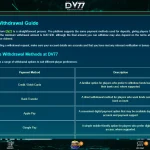
Once approved, the payment route affects how long the transfer takes. A specialist review describes PayID and some e-wallets as potentially quick after approval, while bank transfers and cards may take several business days. Treat that as a guide, not a promise: the operator’s review process and payment provider both matter. A deposit method is not automatically available for withdrawals, either. For instance, specialist reviews describe POLi mainly as a way to deposit, so check the withdrawal options before relying on it.
I’ve learned to separate the wait for approval from the time a payment takes to arrive. They are different stages, and a claim about an online casino’s highest payout rate tells you nothing about either one. Read the withdrawal terms before sending money, including which payment methods can receive funds and what documents may be requested.
There is a bigger risk in Australia: offshore casino services are not licensed in Australia, and unlicensed services lack consumer protections. Australian laws may not help if winnings are withheld. Using a VPN to reach a casino may also lead to voided winnings, account closure or loss of your deposit. A quick transfer is no comfort if the service disputes the withdrawal.
You can use deposit limits, which licensed operators may let you set daily, weekly or monthly. Reputable platforms also provide information about gambling-related harm and direct you to professional support services in Australia.
Using an offshore casino is not explicitly criminalised for individual players under the Interactive Gambling Act 2001. The Act prohibits operators from offering online casino games to Australians, and ACMA can fine operators and request website blocks; an offshore licence does not make a casino licensed in Australia.
Available methods can include PayID, e-wallets, bank transfers and cards. POLi is mainly for deposits, while card withdrawals may be slower or unavailable; PayID and some e-wallets can be quick after approval, whereas bank transfers and cards can take several business days.