A guide to the rules for real-money online casinos in Australia and how to assess claims about games, payments and bonuses.

A real-money casino is an online service where you deposit funds and stake them on gambling games, rather than playing with free credits that have no cash value. That description tells you what happens on the site; it does not tell you whether the operator is licensed in Australia. I used to blur those two things together. They are not the same.
A casino can be visible to Australian players, accept Australian details or appear in a list aimed at Australians without holding an Australian gambling licence. “Available to Australians” is about access or marketing language. “Licensed in Australia” is a claim about regulatory status. The first does not prove the second.
Under the current framework, no Australian-licensed real-money online casino exists. The Interactive Gambling Act 2001 prohibits operators from offering real-money online casino games to people in Australia unless they hold a state or territory licence; the framework does not provide such a licence for these online casino services. So a site serving Australian players from offshore is not an Australian-regulated casino simply because its pages load or it accepts a deposit.
That distinction can get buried under polished wording. An operator may say it is “licensed” and be referring to a licence issued by another jurisdiction. Offshore operators may hold licences from places such as Curaçao or Malta, but those are not Australian gambling licences. A specialist casino review describes the operators featured alongside this article as holding offshore licences, including licences associated with Curaçao eGaming or the Malta Gaming Authority, rather than Australian licences. Those foreign authorities do not make the operators regulated within Australia.
In plain terms, an offshore licence and an Australian licence are different things. The licence may be relevant to the operator’s obligations in the jurisdiction that issued it, but it does not turn the site into a locally licensed service. Nor does the presence of familiar payment options, Australian currency, local wording or a country selector change who regulates the operator.
I learned to stop treating the word “licensed” as a complete answer. It is more like the start of one. You need to know which authority issued the licence and whether that authority has any role in Australia. A badge on a homepage can look official while leaving the important distinction unclear.
There is another distinction worth keeping straight: the operator’s position is not the player’s position. The law prohibits operators from providing these services to Australians, but playing at an offshore online casino is not illegal for an individual Australian player. That does not mean the site is approved locally or that Australian regulation oversees it. It means the legal position for the business and the legal position for a customer are not interchangeable.
This matters when you see a “top” list framed as if every entry were an Australian casino. The phrase can mean casinos that target or accept players from Australia, not casinos licensed by Australian authorities. Those are materially different descriptions. A ranking cannot turn an offshore operator into a local one, and a prominent position on a page is not evidence of local regulation.
I would read “for Australian players” as a description of the intended audience, not a promise about licensing, protection or uninterrupted access. Offshore sites can be subject to access restrictions in Australia, and a page appearing today does not establish that it will remain reachable. The label alone tells you very little.
So when you encounter a real-money casino described as Australian, pause over what “Australian” is meant to say. It may refer only to the players the site hopes to attract. The useful distinction is simple: who can access the service is one question; which jurisdiction licenses and regulates the operator is another. Keep them separate. That is the whole point.
The part that confused me at first was the difference between what a player may do and what an operator may offer. Under the Interactive Gambling Act 2001, providing real-money online casino games to people in Australia is prohibited unless the operator holds a state or territory licence. That rule is aimed at the service provider. It does not mean that an Australian player commits an offence simply by using an offshore casino: playing there is not illegal for the individual.
Legal Distinction
Under the Interactive Gambling Act 2001, providing real-money online casino games to people in Australia is prohibited for operators without a state or territory licence, although playing at an offshore casino is not illegal for an individual player.
Those are separate points, and mixing them up can make a sales pitch sound more reassuring than it is. An offshore site may accept Australian customers, but that does not make it an Australian-licensed casino or change the rules that apply to operators here. Availability is not approval. That distinction matters more than a glossy claim about being an “Aussie casino.”
There is also a practical obstacle: the Australian Communications and Media Authority actively blocks offshore gambling websites. Banks and payment processors are often directed to block transactions connected with listed gambling domains, too. So a site you can reach today may not stay accessible, and a payment that fails is not necessarily a technical glitch you can solve by trying the same route again.
I would not treat a working link as proof that a service is permitted or protected locally. Blocking can affect access, while payment restrictions can affect the route money takes. Neither is a guarantee that a site will remain available, and neither tells you what would happen if an offshore operator disputed a payment or account issue. Keep the distinction clear. It saves confusion.
The minimum legal gambling age in Australia is 18. That applies whether you are considering an online service or gambling in another setting. Being old enough does not change the rules for operators, and a site’s own sign-up process is not a substitute for the law.
 Online Craps in Australia: Offshore Casinos ExplainedLearn about offshore access, bonus terms, game rules and withdrawals. The Interactive Gambling Act 2001 restricts real-money casino operators based in Australia.
 Playson Online Casinos in Australia: What to CheckLearn how to assess Playson slots, bonus terms, demos, offshore protections and payment conditions before playing at an Australian-facing casino.
Tax is a different question. Recreational gambling winnings in Australia are not taxable. That does not turn gambling into income you can count on; it simply describes the tax treatment of recreational winnings. I used to hear “tax-free” and let the phrase make the whole prospect sound safer. It only answers one narrow question. It says nothing about whether an operator can legally offer its service here, whether you can access it, or whether you will get your money back if a dispute arises.
For anyone comparing Australian online casinos with overseas sites, the useful starting point is not the country name in an advert. It is the difference between the player’s position and the operator’s obligations, followed by the reality that ACMA blocks offshore gambling sites and payment routes may be restricted. Keep those facts separate from claims about convenience or local appeal. A familiar label does not rewrite the law.
A game page can look polished on a phone and still leave the important questions unanswered. I’ve learned not to treat a neat screen, a “mobile-ready” label or a long catalogue as proof that a particular game is available to Australian players, works on an iPhone, or can be played for real money. Those are separate claims, and each needs checking.
The legal context matters here. Under the Interactive Gambling Act 2001, operators cannot provide real-money online casino games to people in Australia unless they hold a state or territory licence. In practice, there is no Australian-licensed real-money online casino under this framework, and the Australian Communications and Media Authority blocks offshore gambling sites. That doesn’t make an offshore game listing an Australian-approved option just because it loads on a device. A screen is not a licence.
Under the Interactive Gambling Act 2001, there is no Australian-licensed real-money online casino under the current framework, and the ACMA actively blocks offshore gambling sites.
Usually, “mobile” describes how a website or service is presented on a smaller screen. It does not confirm that every game shown on a desktop catalogue is available on a phone, or that an iPhone and a computer will display the same selection. A promotional page can use broad language while leaving device compatibility and access dependent on the operator.
I’d separate three things before believing the pitch: whether the site opens on your device, whether a named game is actually listed there, and whether the service may legally offer real-money play to someone in Australia. One answer doesn’t settle the others. A page opening is just a page opening.
The same goes for claims about an app. A casino-branded app, a mobile website and a game that runs in a phone browser are not interchangeable descriptions. Don’t assume an app exists, that it is available through an official app store, or that installing something makes the underlying gambling service lawful. Check what the operator is actually offering and be cautious about downloading software from a page you cannot independently trust.
I won’t invent a top ten for online, iPhone or computer casino games. A ranking needs identifiable titles and a basis for comparing them; without those, a numbered list is decoration. The same goes for claims that a selection is the best, most popular or especially suited to Australian players. Those words sell certainty. They don’t provide it.
If a page names a game, look for the details that make the claim testable: the exact title, the provider, the device compatibility information and the terms attached to real-money play. If those details are absent, treat the claim as unconfirmed rather than filling in the blanks yourself. Even a title you recognise does not prove that a particular operator offers it, or that it will work on your device.
Phone and desktop searches can also blur different subjects together. A result about casinos in Las Vegas, for instance, is about physical venues, not necessarily online games for Australians. A page about a computer catalogue does not establish that the same games are available on an iPhone. Similar wording, different question.
For Australians, the central issue is not whether a game looks good on a small screen. It is whether an offshore operator is offering real-money casino play that it is prohibited from providing to people here. Individual players are not made criminally liable simply for playing at an offshore casino, but that is not an endorsement or a promise of protection if something goes wrong.
I’d treat labels such as “instant play” or “mobile casino” as descriptions to verify, not assurances. Check the actual terms and the operator’s current information before sharing personal details or depositing. If the page offers no clear, specific explanation, I don’t take its broad claims on faith. Pretty interface. Still a sales page.
“Slots” and “pokies” are two labels for the same broad kind of casino game. The first is common in online-casino language; the second is the familiar Australian term. Either way, the label alone tells you very little about a particular game. It does not establish who made it, how its features work, what its return is, or whether it is legally offered to people in Australia.
Two labels for the same broad kind of casino game, with "slots" being common in online-casino language and "pokies" being the familiar Australian term.
That distinction matters when a page promises the “best” slots or a list of the biggest jackpots. A ranking sounds like a comparison, but a useful comparison needs clear criteria and current information about each named game. Without that, “best” is just a sales word in a tidy jacket. I’ve learned not to mistake a confident heading for evidence.
A slot or pokie is a game category, not a guarantee of a particular format or experience. The word does not tell you what rules apply, how a result is generated, whether a jackpot is part of the game, or what conditions come with playing it. Those details would have to be checked for the individual title and the service offering it.
This is where broad lists can mislead. A page may place games together because they share a label, then present the collection as if every item had been assessed on the same basis. But a list of names is not the same as an evaluation. If the criteria are unclear, you cannot tell whether “best” means a personal preference, a popularity claim, a return figure, a feature, or simply a promotional placement.
The same goes for claims about “highest return” or “biggest jackpot.” Those are measurable descriptions, not decorative adjectives. To compare them properly, you would need information tied to each game and a clear explanation of what is being measured. A headline cannot supply that on its own. Nor can a broad claim about slots tell you what you would actually encounter on a particular site.
Short version: labels aren’t proof.
I used to treat a ranked list as a shortcut: start at the top, assume somebody had done the hard checking, and move on. That is a poor way to make a decision. A numbered list can look precise while leaving the most important questions unanswered: what was compared, when it was checked, and whether the ranking says anything about the game itself.
Be careful with language that turns a preference into a fact. “Popular” does not automatically mean suitable for you. “High return” does not promise a result on a particular session. “Jackpot” does not tell you the conditions attached to a prize. These words need context, and the details can differ from one title and operator to another.
There is another issue specific to Australia: the law prohibits operators from providing real-money online casino games, including slots, to people physically located here. An offshore site may present a game as available, but that presentation does not make the service locally authorised. The distinction is not about what a game is called; it is about whether an operator may provide it to Australian residents. That is a more important check than any “top” label.
When you see a claim about an individual pokie, separate the claim from the game name. A title may be named alongside a return percentage, a jackpot description or a feature list, but each detail needs its own support. A number without a clear basis is not a useful comparison; a feature claim without the game’s rules is only half a description.
Attention: A game's stated features or a high return percentage do not prove that the operator's real-money service is lawful in Australia or that specific protections apply to you.
The same caution applies to claims about revenue or popularity. Those describe a wider market or a group of players, not the mechanics of one game. They need a defined measure and a credible basis. A large number in a headline may look impressive, but it does not tell you whether it refers to a game, an operator, a period of time or something else entirely.
I’d also keep game information separate from operator claims. A site’s description of a pokie is not the same thing as evidence that its real-money service is lawful in Australia. And a game’s stated features do not tell you what protections apply when you use the platform offering it. One claim cannot quietly stand in for the other.
No shortcut there.
If a page presents a list of online slots, look for explanations that let you understand what the entries have in common and how they were assessed. Does it distinguish a factual game detail from an opinion? Does it explain what a return or jackpot statement means? Does it identify the operator behind the offer and make the Australian legal position clear?
If those questions are brushed aside, treat the list as promotional material rather than a dependable comparison. That does not prove every sentence is false. It means you have not been given enough to judge the claims with confidence.
The same standard applies whether a page calls the games slots, pokies or casino machines. Different wording does not change the need for accurate, specific information. And no ranking can make a prohibited real-money online casino service lawful for Australian players.
I’m not going to pretend a list title does the checking for you. A game category can help you describe what you’re looking at; it cannot verify the claims attached to it or settle whether the service offering it is lawful here.
I used to treat a deposit button as the finish line: money in, play starts. That is only half the transaction. Before putting money into an account, I now check how the payment is credited, how a withdrawal is approved, and whether a bonus can tie up the balance.
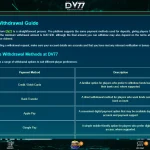
PayID is an identifier system running on the Reserve Bank of Australia’s New Payments Platform. A casino deposit made through PayID may be credited within seconds, but that says nothing about the time needed to get money back out. PayID withdrawals depend on the operator’s own processing. A specialist review describes reported processing windows ranging from one to two hours to as long as 24 hours on business days; treat those as that review’s account, not a promise for every casino.
The payment route matters, too. A specialist review contrasts PayID transfers, which it says can complete in seconds, with traditional bank EFT transfers that may take one to three business days. The casino can still have its own checks before releasing a withdrawal, and the bank or payment service can add another delay after approval. Deposit speed is not withdrawal speed. Easy to confuse.
“No deposit” and “deposit bonus” sound generous, but the headline does not tell you what you must do before withdrawing. The key term is the wagering requirement: it sets how much qualifying play is required before bonus-related funds can be withdrawn.
Bonus Wagering Calculation
Identify the bonus and requirement
Take a $100 bonus with a 35x wagering requirement.
Calculate total turnover
Multiply the bonus amount by the requirement ($100 × 35) to get $3,500 in required wagers.
Understand the result
Recognize that $3,500 is the turnover required before bonus-related funds can be withdrawn, not a guaranteed final balance.
The arithmetic is the bit I used to skip. A 35x wagering requirement on a $100 bonus means $3,500 in wagers. That is turnover, not a fee, and it does not mean you will end with that amount. Repeated play can consume a balance before the requirement is met. A bonus can make a small deposit look more substantial while making the route to a withdrawal longer.
Read the full terms before accepting anything. Check what the wagering multiple applies to, how long you have to complete it, the maximum bet while using bonus funds, which games count and at what contribution, and whether a maximum withdrawal cap applies. Those details can change the practical value of an offer. “Free” can come with a long leash.
Do not request a withdrawal while playthrough is unfinished. The terms may allow the casino to decline the request or treat it as giving up the bonus and winnings derived from it. Some operators also keep associated winnings locked until the requirement is complete. I learned not to assume that the cash balance shown on screen is all available to withdraw.
Before depositing, look for the minimum and maximum transaction conditions, any payment fees, and the operator’s withdrawal rules. Check whether the payment method used for a deposit must also be used for a withdrawal. Then complete KYC immediately after registering, rather than waiting until a withdrawal is pending. If documents are requested at the exit, the review can hold things up.
If a casino advertises a low deposit threshold, that alone does not tell you what later withdrawals cost or how quickly they are handled. I compare the deposit and withdrawal terms side by side, then decide whether I am comfortable with both. A smooth deposit is the easy part. The terms decide the rest.
If you’re choosing an online casino for real-money play in Australia in 2026, check the stated licensing and any practical details that matter to you before deciding where to play. This list gives you a concise reference for each option.
Bizzo Casino
You can note that Bizzo Casino is listed with a Curacao Gaming Control Board license under TechSolutions Group N.V.
Playfina Casino
You can note that Playfina Casino has a Curacao eGaming license under Hollycorn N.V., held since 2017. Its minimum deposit is A$20–30, depending on the offer.
DragonSlots Casino
You can note that DragonSlots Casino is listed with a Curacao Gaming Authority license under Jumpman Gaming Ltd.
Wild Tokyo
You can start with a minimum deposit of A$10 at Wild Tokyo. Its stated payout times are 30–60 minutes for crypto and 1–5 days for fiat.
JustCasino
You can note that JustCasino is listed with a Curacao Gaming Control Board license.
Roby Casino
You can note that Roby Casino has a Curacao eGaming license under Roby Games Ltd.
Vegaz Casino
You can note that Vegaz Casino is listed with Curacao license OGL/2024/1335/0780. Its stated minimum deposit is EUR 20.
Rollero Casino
You can note that Rollero Casino is listed with Curacao Gaming Control Board license OGL/2023/176/0095 under Hollycorn N.V.
SkyCrown
You can start with a minimum deposit of A$30 at SkyCrown. Its stated payout times are around 10–15 minutes for crypto and 1–5 days for fiat.
Golden Pokies
You can note that Golden Pokies is listed with a Curacao license.
A ranking can make a casino look reassuring before you have checked anything that matters. I’ve learned not to treat “trusted” or “top-rated” as evidence. Those are sales words; the useful details are the operator’s identity, its licence information and the terms that apply to your account.
Offshore operators may point to licences from Curaçao, Malta or Anjouan. That tells you the licence is from another jurisdiction; it does not make the operator licensed in Australia. Before depositing, look up the licence on the relevant regulator’s website and check that its status is current. Then compare the licence number and status with what the operator publishes on its own site. If the details do not match, or you cannot establish who issued the licence, stop there.
A badge in a footer is not a check. Nor is a polished ranking, a cryptocurrency label or a large welcome offer. I used to read the headline and skim past the conditions. That is where the important part tends to hide.
Read the operator’s terms before you deposit, especially if a bonus is involved. Check how wagering is calculated against the bonus, how long you have to complete it, whether there is a maximum bet while bonus funds are active, which games count and whether a withdrawal cap applies. These conditions can change what you can withdraw, even when the offer sounds generous.
Do not accept a bonus until you have read its full terms. Complete KYC after registering rather than waiting until you request a withdrawal; leaving it late can add friction at the point you want access to your money. Keep a copy of the terms you accepted, too.
That is a less exciting way to assess a casino than relying on a “best” label. It is also more useful. If the licence cannot be checked independently or the terms are hard to find, I would not let a ranking make that decision for me.
A list of the world’s biggest casinos, a comparison of famous casino cities and a guide to online casinos for Australians are three different things. They can all involve gambling, but one answer cannot stand in for the others. I’ve learned to distrust rankings that slide between them as if “casino” means the same experience everywhere.
A venue ranking is about physical places. A city ranking might count venues, compare visitor appeal or use some other yardstick. An online ranking is about operators and the services they offer remotely. Without a clear measure, “best” is just a sales word with the useful detail removed.
“Largest” sounds more objective, but it still needs a definition. Are you comparing floor area, number of gaming tables, machines, or something else? Those measures can produce different orders. The same problem applies to claims about which city or state has the most casinos: unless the counting method and what qualifies as a casino are clear, a neat numbered list can look more certain than it is.
The online version needs another distinction. A platform being accessible from Australia does not mean it holds an Australian gambling licence. The Interactive Gambling Act 2001 bars operators from offering real-money online casino games to people in Australia unless they are licensed by a state or territory. No such Australian licence is available for real-money online casinos under the current framework. Offshore sites may still target Australian players, but ACMA blocks gambling sites and payment transactions to listed domains can also be stopped.
That is not the same as saying an individual player commits an offence simply by using an offshore site. The legal restriction is directed at the operator providing the service. But access can be unreliable, and an offshore licence does not place the operator under Australian gambling regulation. Different problem.
So a “top” list can conceal a lot. A venue celebrated for its size tells you nothing about whether an online operator is lawful to serve Australians. An online casino promoted as popular worldwide tells you nothing by itself about its licence, access from Australia or terms. Popularity is not a substitute for those checks.
I’ve made the mistake of treating a polished ranking as if someone had done the hard comparison for me. Often, the page is really mixing destinations, operators and promotional claims. Before taking any list seriously, work out what it ranks, how it defines the category and whether the information applies to Australian players. If those basics are blurred, the ranking isn’t much use. A shiny list, still.
A worldwide comparison can be interesting if you are planning a trip or researching the casino industry. It does not answer the practical question of whether a particular offshore site can lawfully provide real-money casino play to someone in Australia. Keep those questions separate, and the grand claims become easier to judge.
“Live casino” can mean two different things: a physical gambling venue with people and machines in the room, or an online table streamed with a real dealer. Those are not interchangeable. A list of famous venues tells you nothing about whether an online service is available to someone in Australia, and a stream does not turn an offshore website into a local casino.
I would not treat a “top” label as evidence that a venue, live table or machine has been checked. That matters more than it sounds. A polished page can make a name feel safe simply by repeating it confidently. It isn’t proof.
An online live-dealer product typically presents a streamed table and lets a player interact through the site. The word describes a format, not a licence, a quality standard or a guarantee that the service will work from Australia. Nor does it tell you who operates the table, what rules apply, or what happens if a connection drops during play. You would need clear, current terms from the operator to understand those details.
For an Australian player, the legal distinction matters. The Interactive Gambling Act 2001 prohibits operators from providing real-money online casino games to people in Australia; that includes casino-style services delivered online. No Australian-licensed real-money online casino exists under this framework. An offshore licence is not an Australian gambling licence, and it does not change the restriction on operators serving Australian residents.
That is not the same as saying an individual player commits an offence by accessing an offshore casino. But access is not assured: the Australian Communications and Media Authority blocks offshore gambling sites, and banks or payment providers may be instructed to stop transactions to listed gambling domains. A site loading today is not proof it will remain reachable tomorrow. A dead end.
A search for casinos in a particular region may be about places to visit, while a search for online live dealers is about remote play. A list of physical venues cannot answer questions about an online account, and an online casino page cannot establish which machines are installed at a venue. I would keep those questions separate rather than let a broad “top casinos” label blur them together.
The same caution applies to “popular” slot machines. Popular with whom, where, and at what point in time? Without reliable, current information about a specific machine, the label is just sales language. I won’t turn it into a recommendation by naming titles or implying that a machine is available to Australians online.
When a page claims to rank live casinos, I first look for what the ranking actually measures. Does it explain how the operator was assessed, identify the legal jurisdiction, and link to terms that match the service being promoted? If it offers only superlatives—“best,” “trusted,” “instant”—with no way to check the underlying claim, I treat that as advertising, not due diligence.
If an offshore operator names a regulator, check the licence’s current status on that regulator’s own website, then compare the licence details with the operator’s terms. A logo on a page is not confirmation. Read the terms before depositing, including the rules for account verification and withdrawals. In Australia, that research does not make an offshore casino locally regulated or remove the legal restrictions on operators.
I’ve learned that a neat ranking can make a risky decision feel pre-sorted. It isn’t. For live dealers, physical casinos and individual machines, the label “top” doesn’t substitute for evidence—and I won’t manufacture a list to make it look as though it does.
Using PayID does not change the legal position: playing at an offshore online casino is not illegal for an individual Australian player. However, the operator is not locally licensed, and banks or payment processors may block transactions to listed gambling domains.
No Australian-licensed real-money online casino operates under the current framework. Individual players are not breaking the law by playing at an offshore casino, but operators are prohibited from offering these services to Australians without a state or territory licence.
Cryptocurrency withdrawals can sometimes take as little as 10 minutes, though processing times vary. PayID transfers can reach your bank within minutes after the casino approves the withdrawal, but the casino’s review may take 24–72 hours.
Check which authority issued its licence and remember that a Curaçao or Malta licence is not an Australian gambling licence. A licence badge or Australian branding does not mean the casino is regulated in Australia.