Australian real-money casino play often involves offshore operators, so licensing, bonus terms and payment routes need careful checking.

For an Aussie punter looking for casino games played with cash rather than just for fun, the local picture is unusual: there are no Australian-licensed websites offering real-money casino play. That gap helps explain why people searching for online pokies and other casino games encounter offshore operators instead. It does not mean those sites are local services with a different label. Their businesses are based outside Australia, and their relationship with Australian customers is different from that of a domestically licensed provider.
Offshore casinos licensed in Curaçao, Malta or Anjouan are among the options Australian players commonly turn to. Most sites that accept customers from Australia are registered in Curaçao. That is a description of where many operators are based, not a recommendation or a guarantee about any one casino. A licence’s meaning depends on the authority that issued it and the rules it applies to the operator. The word “licensed” can sound like a simple stamp of reassurance; in practice, it tells you something about the operator’s stated regulatory home, not that it is an Australian service.
If you are looking for real-money online casinos in Australia in 2026, this overview helps you quickly check the available licensing details and any stated deposit or payout conditions. Use each verdict as a concise reference before deciding where to look next.
Bizzo Casino
Bizzo Casino operates under a Curacao Gaming Control Board licence held by TechSolutions Group N.V. This makes its licensing information the main notable point in this overview.
Playfina Casino
Playfina Casino is licensed by Curacao eGaming through Hollycorn N.V., which has held the licence since 2017. Its minimum deposit is A$20–30, depending on the offer.
DragonSlots Casino
DragonSlots Casino is licensed by the Curacao Gaming Authority through Jumpman Gaming Ltd. Its listed licence is the key available detail for your initial review.
Wild Tokyo
Wild Tokyo holds a Curacao licence and lists a minimum deposit of A$10. Stated payout times are 30–60 minutes for crypto and 1–5 days for fiat.
JustCasino
JustCasino operates with a Curacao Gaming Control Board licence. The available information makes its licensing status the main point to consider.
Roby Casino
Roby Casino is licensed by Curacao eGaming through Roby Games Ltd. Its licence details are the primary factual reference available here.
Vegaz Casino
Vegaz Casino holds Curacao licence OGL/2024/1335/0780. Its listed minimum deposit is EUR 20.
Rollero Casino
Rollero Casino is licensed by the Curacao Gaming Control Board under OGL/2023/176/0095, held by Hollycorn N.V. The licence number and holder are its main notable details.
SkyCrown
SkyCrown is licensed by the Tobique Gaming Commission and lists a minimum deposit of A$30. Payouts are stated as approximately 10–15 minutes for crypto and 1–5 days for fiat.
Golden Pokies
Golden Pokies operates under a Curacao licence. With no further listed attributes, its licensing status is the main available point for your reference.
That distinction is easy to lose when a site is written for Aussie gamblers. The language may feel familiar, and the games may look much like casino games you have seen elsewhere. But familiar presentation does not make the business local. A real-money casino online is still an offshore service if the company operating it is based overseas, regardless of whether its pages refer to Australian customers or display familiar payment terms.
The absence of a domestic online casino market also shapes the way people approach the subject. Some are looking for pokies; others are interested in table games or live-dealer formats. The common thread is that they are looking for casino play involving real stakes, while local restrictions on pokies mean they do not find a domestically licensed online casino to use. This is why offshore casinos form such a visible part of the conversation. It is a market shaped by the lack of local licensed options, not a row of Australian sites competing under a shared domestic framework.
I would be wary of treating the phrase “best real-money online casinos in Australia” as if it meant there is a straightforward local shortlist. The words can suggest a familiar consumer choice between Australian businesses, but the underlying market is offshore. That changes what the label “best” can sensibly mean. A ranking may compare foreign operators, but it cannot turn them into locally licensed casinos. The distinction matters before you even get to individual features.
It also helps to separate the game from the service. A slot or roulette table may be recognisable wherever you encounter it; the company taking the real-money play is a different matter. When a site offers an online real-money casino experience to Australians, its interface might be designed to attract customers here, while its operating base and licence remain overseas. Those are not contradictory facts. They are the basic shape of this market.
There is a temptation to collapse all of this into one question: “Can I find a casino?” But there are two different things hidden inside that question. One is whether a person can come across offshore sites that accept Australian customers. The other is whether Australia has a domestically licensed real-money casino sector. The first explains what people encounter online; the second is a clear no. Keeping those ideas apart makes the landscape less confusing, even before considering the separate legal questions around offshore play.
I have learned not to let polished wording do the thinking for me. “For Australian players” may describe who a site is trying to reach; it does not tell you that the site is Australian, locally licensed or backed by domestic protections. Likewise, a foreign licence should not be read as though it were issued by an Australian regulator. The broad market context is useful, but it is not a verdict on a particular operator.
So the practical starting point is modest: Australian real-money casino play, where it is sought online, is associated with offshore operators rather than a domestic licensed casino sector. Curaçao is the most common registration base among sites accepting Australians, while Malta and Anjouan are also jurisdictions associated with casinos used by Australian players. None of that is a shortcut to judging a site. It is simply the map of the market.
That map is worth having before the labels start doing their usual work. A site can look local without being local. A licence can be foreign without being Australian approval. And an online casino offering real-money games is not part of a domestic licensed market just because Australians are among its intended customers. Start there.
The legal picture is easier to follow if you separate what the law says about operators from what it says about individual Aussie punters. Those are not the same question, even though casino advertising often blurs them together.
Under the Interactive Gambling Act 2001, a company operating from within Australia cannot provide real-money online casino games to people here. That covers casino-style play such as pokies and table games. The restriction is aimed at the service provider; it does not mean an Australian resident commits an offence simply by playing at an offshore casino.
That distinction matters. I have seen people assume that if an online casino accepts Australian customers, it must be approved here. That is not what acceptance means. Nor does the fact that a site has a foreign licence turn it into a locally licensed business. The legal position for the operator and the position for the individual player are separate.
The Act does not criminalise an Australian player for using an offshore casino licensed in Curaçao, Malta or Anjouan. So, if your concern is whether the act of playing at one of those foreign-licensed sites is itself an offence for you, the answer under this law is no.
That is a narrow point, not a general endorsement. It does not mean every offshore casino is lawful in every respect, that every claim made by an operator is reliable, or that a foreign licence gives you the same standing as a local customer using a domestically regulated service. I would not read “players are not criminalised” as “there is nothing to think about.” Different statements, different consequences.
The wording can feel counterintuitive: the service is prohibited from being supplied to Australians by an operator working from within the country, while an individual player is not made a criminal for using a foreign-licensed site. The law draws that line between provider and customer. It is worth keeping it intact rather than treating the whole arrangement as either fully permitted or a criminal act by the player.
A licence issued overseas is not the same as Australian regulatory oversight. Domestic protections associated with regulators such as the Australian Communications and Media Authority (ACMA) do not extend to offshore platforms. If a dispute arises, you cannot assume that the local regulator can handle it in the way it might deal with a service under its authority.
This is the part I would keep in mind whenever a site uses reassuring language about being “licensed.” The word tells you that the operator claims oversight from a particular jurisdiction; it does not make the platform local, and it does not bring domestic regulator protections with it. The distinction is easy to miss when the site is presented in Australian dollars or speaks directly to Aussie gamblers. Familiar presentation is not the same as local regulation.
No Local Protection
Domestic regulator protections from authorities like ACMA do not extend to offshore platforms, meaning you have no local safety net for disputes.
It also helps to be precise about what “not criminalised” does and does not settle. It addresses the player’s criminal liability under the Interactive Gambling Act 2001. It does not promise a particular outcome if you have a complaint, and it does not mean ACMA can step in as though the casino were operating under Australian oversight. Those are separate issues.
I used to treat a site’s legal-sounding badges as if they answered every question. They don’t. A foreign licence and the absence of player criminal liability tell you something about the legal framework, but neither is a substitute for understanding the limits of offshore protection. No local safety net.
So, when someone asks whether they can play an online casino for real money without breaking this law, the useful answer needs both halves: the Act prohibits companies from providing real-money casino services from within Australia, but it does not criminalise individual Australians for playing at offshore casinos licensed in the named jurisdictions. At the same time, domestic regulator protections do not follow you onto those platforms.
That is the legal distinction, not a recommendation to play. Knowing where the law places responsibility can clear up a common misunderstanding; it cannot make an offshore service equivalent to a locally regulated one. I would keep those points separate, especially when a site’s own wording makes them sound like the same thing.
A bonus attached to online casino slots can look like extra playing money. I used to read it that way too. The catch is that the bonus is not simply cash you can take back out: wagering requirements set how much must be bet before bonus-related winnings become eligible for withdrawal.
The calculation can be easy to miss. If the requirement applies to the bonus, the stated multiple is worked against that bonus amount. A specialist casino review reports pokies bonus requirements in the 30x–45x range, but that is a report of offers it assessed, not a promise about every casino or promotion. The actual terms on the offer you are considering are what matter.
Slots generally count fully toward wagering, which makes them a natural fit for clearing a slot bonus. That does not mean the target is small, or that every spin moves you closer by the amount you expect. Check the qualifying contribution and the precise wagering base in the promotion terms. A requirement may refer to the bonus alone or to the deposit and bonus together; those are very different calculations.
Attention: A bonus applied to both the deposit and bonus creates a larger wagering base, which can substantially increase the amount of betting needed before funds are withdrawable.
That distinction is where the headline can get slippery. A specialist review describes a 60x requirement applied to deposit plus bonus as one that can tie up funds. The multiplier applies to a larger base than a bonus-only requirement, so the amount of betting needed can become substantial. Until the wagering is complete, the money and any related winnings may not be available to withdraw. “Big bonus” can mean a bigger job.
I have made the mistake of accepting an offer first and reading the conditions later. The number on the banner was obvious; the wagering base, exclusions and restrictions were tucked away in the terms. That is how a promotion can feel generous at the start and restrictive once you try to use it.
Before activating an offer, read the full terms and check:
Those details are not fine print in the harmless sense. Exceeding the stated maximum bet or using excluded games can void bonus winnings. An active promotion can also prevent a withdrawal until its wagering is complete; attempting to withdraw early may be declined or may cost you the bonus and associated winnings.
It is worth deciding before you opt in whether you actually want the added conditions. If you would rather play without a wagering target, declining the promotion may be simpler than accepting it and later trying to work around its rules. If you do take it, keep your bets within the stated maximum and use only eligible games. Don’t assume that a bonus is withdrawable just because it appears in your account.
The useful comparison is not the advertised bonus size alone. It is the amount you must wager, the games that count, and the rules you have to follow while doing it. A smaller offer with clearer conditions may be easier to understand than a larger one carrying a demanding combined target. I now check the base before I get distracted by the headline.
Slots may count fully toward wagering, but that only describes their contribution under the terms. It does not make the promotion automatically worthwhile, nor does it remove the restrictions attached to it. Read first. Then decide.
A bonus balance can look straightforward until you check which games actually move its wagering requirement along. The game you choose matters: a bet on one format may count differently from the same-sized bet on another. I check the contribution rules before treating a bonus as usable.
A specialist review notes that bonus offers can come with game-weighting rules and a maximum permitted bet. Those conditions sit alongside the wagering requirement itself. The requirement tells you how much betting is needed before bonus-related winnings become withdrawable; weighting determines how much of each qualifying bet is credited. The maximum-bet rule sets a separate boundary while the offer is active.
Table games such as blackjack or roulette can contribute only a fraction of a bet toward wagering. A stated contribution of 10–20% means that only that portion counts toward the requirement; the rest does not advance it. So a game that feels like ordinary play may make slow progress on a bonus.
This is where I’d avoid assuming that every casino game real money play counts equally just because the game is available in the same lobby. Read the promotion’s terms and check the weighting for the specific game. If the rules list a range or separate categories, rely on the offer attached to your account rather than a general expectation.
Live-table play contributes less toward wagering than slots. That distinction matters if you prefer a dealer-led game and expect it to clear a bonus at the same pace as another format. The contribution can be lower, so more play may be needed to make equivalent progress.
The exact weighting is set by the promotion’s terms. Check it before you start, and look for the maximum bet rule at the same time. A bet that exceeds the stated maximum can put bonus winnings at risk, even if the game itself is eligible. Small print, big consequences.
Instant-win games need their own check. Some formats may not count toward wagering at all. If a game is excluded, bets on it will not help meet the requirement, however often you play. Availability in a casino’s real-money games section does not by itself mean that the promotion recognises it.
I’d look for the game name or category in the excluded-games wording before opting in. If the terms are unclear, ask the operator to confirm how that game is treated while the bonus is active. Don’t assume a game contributes simply because it appears beside eligible titles.
For online casino games played with a bonus, three details belong together: wagering contribution, excluded formats and the maximum permitted bet. Table games may count only in part, live-table play counts less than slots, and some instant-win formats may count for nothing. Each can change how quickly a bonus requirement is met.
That is why I treat the promotion’s full terms as the working rules, not the game menu or the headline offer. Confirm the weighting for your chosen format before playing, stay within the stated maximum bet, and make sure the requirement is fully cleared before requesting a withdrawal. A bonus can be available to use and still be a poor fit for the games you actually want to play.
A balance on the screen is not the same as money in your account. Once you request a withdrawal, the casino may still need to review the request, confirm your identity and apply its own processing steps. I used to treat the “cash out” button as the finish line. It isn’t.
A specialist casino review identifies account verification as the most common cause of withdrawal delays. That makes it worth completing identity checks before requesting a payout, rather than waiting until the money is already pending. Casinos may ask for government-issued identification and proof of address when a withdrawal crosses a specified threshold. The exact requirement depends on the operator, so read its instructions and submit what it asks for clearly. If a document is missing or cannot be accepted, the review can take longer.
There can also be a hold after you submit the request. A specialist review reports that some casinos keep withdrawals pending for anywhere from zero to twenty-four hours. During that window, the site may let you cancel the request and return the funds to your balance. That is a tempting little trap when you are already thinking about another bet. I would not treat pending money as safely out of reach.
If you cancel and play the balance again, the original withdrawal is no longer moving through the same process. You have chosen to put those funds back into play. If your aim is to keep a win, avoid reopening the balance while the request is pending; check whether the casino allows cancellation and what happens if you use it.
Bonuses can complicate the timing too. If a promotion is still active, its wagering conditions may have to be cleared before a withdrawal request is accepted. Trying to withdraw mid-wagering may lead to a declined request or the loss of the bonus and associated winnings. I learned not to assume that a displayed balance is all withdrawable. Read the promotion terms, including any maximum-bet or excluded-game rules, before treating the funds as ready to leave.
Keep a record of the request and any messages about it. If the status changes or the casino asks for more information, you can respond to the specific issue instead of guessing. A delay does not, on its own, tell you what has gone wrong; the account check, pending period or promotion terms may each affect what happens next.
The unglamorous bit. Verify first, understand what “pending” means, and don’t cancel a payout casually.
An offshore licence is worth checking, but it is not a magic stamp that makes a casino trustworthy. I’d treat it as a starting point: it can tell you which authority the operator says oversees it, while leaving plenty of other questions unanswered.
First, look for the licence details on the casino’s own site. Check that the named operator and the licence information match what the site claims, rather than assuming a logo in the footer settles it. If the operator names an authority, check the licence status through that authority’s own information where possible. A licence can change or lapse, so an old review or screenshot is not enough to establish what applies now.
There is a useful distinction between a general market claim and a dated check. One specialist affiliate review reported that the four casinos it covered held active licences from recognised offshore authorities. That describes what the review found about those operators at the time; it is not evidence that every offshore casino is licensed, or that the same status still applies. I would not turn it into a blanket endorsement.
Then read what the licence actually means. An offshore licence is not Australian authorisation, and it does not bring the protections of domestic regulators such as ACMA to an offshore platform. So “licensed” means something narrower than the reassuring version implied by a banner: an offshore authority is identified as the operator’s regulator. It does not tell you, by itself, how a dispute will be handled or whether the site’s terms are fair.
I used to see a licence badge and mentally tick off “safe”. That was too quick. The operator’s terms still matter, and vague wording about account rules or promotions deserves a closer read before you deposit. Check whether the company named in the terms is the same one shown in the licence information. If those details are hard to find, inconsistent, or difficult to understand, don’t fill in the gaps with optimism.
A licence also cannot guarantee that every part of the experience will suit you. It is one checkpoint, not a recommendation and not a ranking. I would weigh it alongside the casino’s written terms and the practical details that matter to me, rather than trusting a polished page or a string of “top” claims.
No badge does the thinking for you. A current, identifiable licence gives you something specific to verify; it does not remove the need to read carefully or make an offshore casino equivalent to a locally regulated service.
A phone can make casino pages feel easier to browse, but a tidy screen is not evidence that an operator is trustworthy or that its terms are fair. I’ve been caught by the shine of a slick interface before. The important details still need to stand up when you slow down and read them.
Before engaging with any real-money casino service, check whether you can read its terms clearly on your device. Look for the rules that affect play, including bonus conditions, game exclusions and maximum bets. If the text is cramped, hidden behind awkward menus or difficult to navigate, don’t guess at what it says. Switch to a larger screen or leave it until you can review the wording properly.
A mobile-friendly layout also does not tell you whether an app exists, whether a site will work well on your phone, or whether an offer applies to mobile play. Those are separate claims, and they need to be stated by the operator in terms you can verify. Don’t treat an app icon, a short banner or a smooth-looking homepage as a substitute for clear information.
There is another point I would not skip: a phone makes it easy to move quickly. That can mean tapping through notices without really taking them in. I’ve done that, then had to go back and work out what I’d agreed to. Slower is better here. Read the conditions before you decide whether to proceed, and make sure you understand them.
For Aussie punters, the key check is not whether a real-money casino looks good on a small screen. It is whether the information is clear enough for you to make an informed decision—and whether the service is lawful to provide where you are. A mobile design cannot answer that for you.
No shortcut here.
Live dealer tables can make a real-money session feel more like a night at a casino than a run of online pokies. But when a bonus is active, the game’s pace and atmosphere are only part of the calculation. What matters is how much each wager moves the bonus requirement.
Live dealer games often contribute between 0% and 10% toward wagering. The exact rate depends on the offer’s terms. At the lower end, your play may make no progress at all; even where it counts, only a small share of your stake may be credited. So a bonus that looks ready to use can take a long time to clear if you plan to play live tables.
I used to read “bonus included” as if it meant the same thing as cash in my balance. It doesn’t. Bonus funds can come with conditions, and the contribution rate is one of the easy details to miss. A table may be open to play while still doing very little to satisfy the requirement.
Before accepting an offer, look for the live-game weighting in its terms and check whether the specific table category is included. Then check the maximum bet rule and any excluded games. A wager above the stated maximum, or play on an excluded game, can put bonus winnings at risk. The full rules matter more than the headline.
If you mainly want live dealer play, compare the bonus conditions with the way you actually intend to play. A low contribution rate means you may need far more eligible wagering to clear the requirement than the balance display suggests. If the rate is zero, live play will not advance it. That can leave funds tied to an offer rather than available to withdraw.
No magic shortcut. If you would rather play live tables than work through a bonus, declining the promotion may be simpler. If you accept it, keep track of the remaining requirement and stay within the stated rules. The balance is not the whole story.
A fresh name can make an offshore casino feel like a clean slate. I’ve learned not to treat “new” as a selling point. It tells you how long the brand has been around, not whether the operator is reliable, whether its rules are workable or whether the information on its site is complete.
Start by identifying the company behind the casino and the authority named on its licence. Check that the licence is active and that the operator’s details match across the site’s licensing information and terms. A licence from an offshore authority is relevant when assessing who oversees the operator, but it does not make the casino locally licensed in Australia or bring Australian regulator protections to the platform. Don’t let a badge do more work than it can.
Then read the terms before opening an account or accepting a promotion. I know how easy it is to skim past the small print when a site looks polished. That is exactly when I slow down. Look for the rules that affect your account: what the operator can require, which conditions apply to promotions, and what could happen if you break a rule. If the terms are vague, hard to find or inconsistent with other pages, that is a reason to pause, not a puzzle you need to solve after depositing.
A new online casino offering real-money play may have little history for you to assess. That uncertainty matters. A convincing design, confident wording or a launch announcement cannot show how the operator will handle a dispute or apply its rules. Nor does a recent launch establish that the site is safer or better than an older one.
For Australian readers, there is another distinction worth keeping clear: an offshore licence is not permission to provide real-money casino services within Australia. The operator’s licensing claims and the legal position in Australia are separate questions.
If you cannot establish who runs the site, verify the licence, and understand the terms, don’t rush into it. I’d rather miss a launch than discover the rules after I’ve put money at risk. New is not proof.
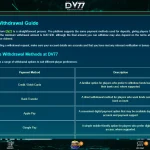
A payment option shown beside a deposit button does not automatically work in reverse. Casinos may accept cards, e-wallets or cryptocurrency for deposits, but that list alone tells you nothing about which methods are available for withdrawals. The two directions need to be checked separately.
That distinction matters before money goes in. I’d treat a method as deposit-only unless the payment terms explicitly say it can also receive payouts. Otherwise, you can end up with funds in an account and no route back through the method you used to put them there. Small detail. Big difference.
Neosurf is a clear case: its vouchers can be used to deposit, but not to withdraw. If you fund an account with one, you will need to look at the casino’s stated withdrawal options instead. Don’t assume the voucher can be refunded or converted into a payout; that is not what this method does.
Cards, e-wallets and cryptocurrency are broad categories, not a promise that every casino accepts every option for both transactions. Availability can differ by operator and by direction of payment. Read the payment terms before deciding whether a method suits you, and check what the casino says about withdrawals—not just the logos displayed on its deposit page.
For anyone considering real-money casino play online, the useful question is not simply “Can I pay in?” It is also “What route, if any, is available to pay out?” If that answer is unclear, pause before depositing.