A practical look at mobile access, licensing, Australian rules, bonus conditions and crypto withdrawal trade-offs at offshore casinos.

When I first looked at offshore casino sites on a phone, I expected to find an app in the same place as any other mobile service. That is usually not how it works. Casinos that accept Australian players tend to offer access through a mobile browser or a Progressive Web App (PWA), rather than a native app downloaded from an app store. In Australia, casino apps are rarely listed on Google Play or Apple’s App Store, so opening the website in your browser is the default.
A browser-based casino is still a website, just arranged to work on a smaller screen. You open it in your phone’s browser, sign in with your account, and use the mobile version of the site. The account is generally the same one used on desktop; you are not setting up a separate mobile profile just because you changed devices. If you have already used the site on a computer, the phone version is another way into that account.
That distinction matters. “Mobile casino” can sound as if you need to install something, but the phrase often means the site adjusts to a phone screen. You may see menus, account details and game pages laid out differently from the desktop version, while still using the browser. Close the tab and you have closed the page, not removed an app from your device. Simple enough.
A PWA sits between a regular website and a native app. It is a shortcut to the casino website that behaves more like an app on your phone. You can add it from the website itself if the site presents an install or add-to-home-screen prompt. Tap that prompt, confirm the installation, and an icon appears on your home screen. Later, tapping the icon opens the PWA experience without you needing to find the website again in your browser.
The important part is where that prompt comes from: the website. A PWA is not the same thing as an app listed in an app store, and installing one does not mean you have downloaded a conventional native app. If a site does not show an install option, you can still use its mobile browser version. You do not need to install a shortcut to browse the site.
I used to treat any home-screen icon as proof that I had installed a proper app. It is an easy assumption to make, because the icon looks familiar and the page may open in an app-like window. But the label matters less than what is happening underneath: a PWA is tied to the website. If you remove the shortcut, you have not necessarily deleted an independent app in the way you might expect.
Be cautious with files offered for download outside the app stores. Sideloaded casino apps carry security risks, and their safety depends on the operator. A download prompt is not proof that an app has been checked by Google or Apple. I would not install a file simply because a page says it makes access easier. If you choose not to install anything, browser play remains the straightforward option.
A VPN is not a phone-access fix. Using one to reach a blocked casino may void winnings and lead to account closure. I would not treat a change in connection settings as a reliable way to make a site work. The point here is the format: a mobile browser or a PWA, not a workaround for access restrictions.
On a small screen, the browser can also make familiar tasks feel different. You may need to scroll to find account controls, and a page that looks tidy on a computer can feel crowded on a phone. If something is hard to read, zooming in or turning the phone sideways may help, but you can also return to the desktop version when you need a larger view. The same account is used across the two formats.
Before adding a PWA, read the prompt and check that it is coming from the website you intended to open. Once installed, its icon can make the shortcut look like a standalone app, so it is worth remembering that it leads back to the site. If the option is absent, do not go hunting for an unofficial download; use the browser instead.
Attention: Sideloaded casino apps carry security risks. Do not install files simply because a page claims they make access easier.
For most people, the practical choice is uncomplicated: open the site in a mobile browser, sign in, and use the phone layout. Add a PWA only if the website offers that option and you want a home-screen shortcut. It is convenience, not a different kind of account. No magic app.
A casino’s homepage can make its credentials sound settled: a badge, a regulator’s name and a line about being “trusted”. I’ve learned not to treat polished wording as proof. The first thing a licence can tell you is which jurisdiction the operator says it is connected to. It does not, on its own, establish that every claim on the page is accurate or that a particular player will have a smooth experience.
Curaçao, the Malta Gaming Authority (MGA) and Gibraltar are among the jurisdictions commonly associated with casinos that accept Australian players. Seeing one of those names gives you a starting point for understanding the site’s claimed licensing context. It does not make those jurisdictions interchangeable, and the name alone is not enough to tell you how a specific dispute would be handled.
That distinction matters because “licensed” is often used as if it were a complete review in one word. It isn’t. A licence refers to the operator’s stated regulatory framework; it is not a personal guarantee about withdrawals, customer support, or how a site will respond when something goes wrong. The badge is a claim to examine, not a verdict to borrow.
An offshore casino licence points to a jurisdiction outside Australia. The country or authority named may help explain the framework the operator says applies to its business. But the jurisdiction’s name cannot answer every practical question about the site in front of you. It does not tell you whether the company name in the footer matches the entity named in the licence, or whether the badge is current and relevant to that particular website.
I used to see a regulator’s emblem and move on. That was the easy part. A better habit is to read the wording around it and notice exactly what is being claimed: which entity is licensed, under what name, and whether the licence is presented as applying to the casino you are viewing. If the page only offers a badge with no clear explanation, that leaves you with less to assess—not more reassurance.
The distinction between a jurisdiction and an operator is easy to miss. Curaçao, the MGA and Gibraltar are names associated with licensing; none is the name of the casino itself. A site may use a familiar regulator’s name in promotional copy, but that does not, by itself, prove the relationship between the regulator, the licensed entity and the website. Keep those pieces separate in your mind.
Casino marketing tends to bundle several ideas together: “secure”, “fair”, “fast” and “licensed”. Those words don’t all mean the same thing. A licence claim concerns regulatory status. It should not be read as a promise that the operator will approve a withdrawal quickly, resolve every complaint in your favour, or make the terms easy to navigate.
The same goes for games. A licence badge is not a personal assessment of each game or a guarantee about what you will get from playing. If the pitch says “best”, that is an advertising description, not a licensing category. The language can sound official while doing very little to clarify what the licence covers.
A licence refers to the operator's stated regulatory framework; it is not a guarantee regarding withdrawals, customer support, or how a site will respond to disputes.
This is where I try to slow down. Instead of asking whether the badge looks convincing, ask what the page actually identifies. Is there a named authority? Is a legal entity identified alongside it? Does the site explain the connection, or does it leave you to infer one from a logo? These are not proof of safety checks by themselves; they are ways to avoid mistaking a promotional display for a clear explanation.
A licence is one piece of information about an offshore casino site, not a shortcut around uncertainty. A familiar jurisdiction may sound reassuring, but familiarity is not the same as evidence about the specific operator. Nor does a licence claim settle questions about fees, payment conditions or the experience of other customers. Those are separate details, and the marketing may put them all under the same glossy umbrella.
I’ve made that mistake: one official-looking detail stood in for the checks I hadn’t done. It felt like diligence, but it was mostly relief. A calmer approach is to treat the licence as context, read the site’s claims literally, and avoid filling gaps with assumptions. If the operator’s identity or the scope of the claimed licence is unclear, don’t convert that uncertainty into confidence just because the page looks polished.
“Licensed” may be relevant. It is not a verdict.
A casino’s country of registration can sound like the deciding detail. It is not. For someone in Australia, the more important question is what Australian rules say about an operator offering online casino-style games to people here. The Interactive Gambling Act 2001 prohibits gambling operators from providing those games to users in Australia. A business being based offshore does not make that Australian restriction disappear.
That distinction is easy to miss when a site presents itself as international. Its branding, website address or stated home country may give the impression that it operates under a separate set of rules. But the relevant point is not simply where the business says it is located. The Australian law concerns the service being offered to people in Australia. A foreign address does not turn an otherwise prohibited offer into an authorised one.
I’ve learned to distrust the comforting little details that make a site look settled and official. A polished page can explain its own terms; it cannot change the Australian position. Nor does a licence from another jurisdiction override the restriction on operators offering online casino games to users here. That is why “offshore” should not be read as “outside Australian rules.” It describes a location, not a legal pass.
There is also a difference between the operator’s position and an individual’s. Under the Interactive Gambling Act 2001, playing at an offshore mobile casino is not itself illegal for an individual Australian player. That does not mean the operator is permitted to offer the service to people in Australia, and it does not mean the site is approved or protected by Australian authorities. Those are separate questions. Mixing them together leads to a false sense of security in either direction.
VPN Risks
Using a VPN to reach a blocked casino may void your winnings, lead to account closure, and breach the site's own rules.
The Australian Communications and Media Authority, or ACMA, actively blocks access to illegal gambling sites. A block is part of how the rules are enforced; it is not an endorsement of the sites that remain reachable, nor does it make the operator’s activity lawful. Access can be affected, and a site being visible at one moment should not be treated as proof that it is permitted to serve Australian users.
I’m not going to turn that into a set of instructions for getting around a block. Using a VPN to reach a blocked casino may breach the site’s own rules, risk account closure and put winnings at risk. A workaround would not change the underlying Australian restriction on the operator. It would only add another uncertainty to an already unclear situation. Not worth pretending otherwise.
This is where the phrase “available in Australia” can mislead. It may mean a page loads, or that the operator has a registration form; neither fact establishes that the service is lawful for the operator to provide here. Likewise, “licensed overseas” describes a licence outside Australia, not local permission. Those labels answer narrower questions than many readers assume.
There is a practical consequence beyond the legal distinction: if an offshore casino refuses to pay, there is no Australian government body to complain to for help recovering those winnings. That leaves a punter dealing with an overseas business rather than relying on an Australian casino regulator to resolve the dispute. The possibility of a site being reachable does not create that local protection.
So I separate three things: where a business is based, what Australian law prohibits operators from offering, and what liability the law places on an individual player. The country listed on a website answers only the first. ACMA’s blocking activity is another important part of the Australian context, but a block is not a guide to what is safe or lawful to access.
It is tempting to reduce the whole issue to a simple label: offshore casino Australia, legal or illegal. That skips the distinction that matters. The Interactive Gambling Act prohibits operators from offering online casino-style games to people in Australia, while playing at an offshore mobile casino is not itself illegal for an individual under that Act. One statement does not cancel out the other. The operator’s restriction remains.
I keep that distinction in mind because it prevents two opposite mistakes: assuming an overseas licence makes a site acceptable here, or assuming an individual player faces the same legal position as the operator. Neither assumption follows. Country is context, not a shield.
An offshore casino is a casino business operating from outside Australia that offers its games through the internet. “Offshore” describes where the operator is based, not a special kind of game or a guarantee about how the site will treat you. If you see the term attached to a mobile casino, it still refers to an online service run from overseas; using a phone does not change what the word means.
That distinction sounds obvious, but I used to read “offshore” as if it meant something more reassuring: established, international, perhaps checked by someone. It means none of those things on its own. It tells you the business is outside Australia. It does not, by itself, tell you whether its claims are reliable, whether you will be able to withdraw, or whether you will have practical help if a dispute arises.
An online casino business operating from outside Australia that offers its games through the internet.
“Best” is another word that can blur the picture. A site described as the best offshore casino is still an offshore operator, not a separate category with a built-in standard. The label may reflect someone’s opinion or promotion. It does not change the operator’s location or make the word “best” proof of anything. I learned to separate the description from the sales pitch. Different things.
The phrase can also be confused with the place a website appears to come from. A familiar Australian-facing page, local currency display, or mobile layout does not make the operator Australian. The key idea is that the business providing the gambling service operates outside the country. The page may be designed to feel close to home; the word “offshore” points to the operator’s location, not the look of the page.
For an Australian reader, there is an important distinction between that definition and the position of an individual. Under the Interactive Gambling Act 2001, playing at an offshore mobile casino is not itself illegal for an individual Australian player. That narrow point is worth stating plainly. It does not turn the operator into an Australian business, and it should not be mistaken for a recommendation to play.
I also wouldn’t treat “not illegal for the player” as a stamp of safety. Those are different questions. The first is about the individual’s position under that law; the second is about the risks of dealing with a business operating overseas. A reader can understand the legal distinction without assuming that every practical problem has an easy remedy. That gap matters.
When people talk about offshore casinos, they may mean a range of online businesses, not one uniform type of service. The term does not identify a particular game, payment method, app, or customer experience. Nor does it tell you how an operator handles a complaint. Those details vary from site to site, so the label alone cannot carry them.
It is tempting to make the word do too much work. “Offshore” can sound like a warning, while “international” can sound polished; neither adjective tells you the full story. I now take both as descriptions, not conclusions. The useful starting point is modest: identify that the casino operates outside Australia, then keep that fact separate from assumptions about its quality, trustworthiness, or suitability.
So when you encounter a reference to offshore casinos, read it literally. It means an online casino business based beyond Australia’s borders. It does not mean that the individual player is committing an offence merely by playing under the Interactive Gambling Act, and it does not certify the business as dependable. Just a location. Not a promise.
The phrase “offshore gambling” can make the whole question sound like a trap: if a site is outside Australia, does that automatically make you a criminal for using it? Under the Interactive Gambling Act 2001, playing at an offshore casino is not illegal for an individual Australian player. That distinction matters. It is about your position as a punter, not a promise that every part of the experience is safe or straightforward.
I used to treat “not illegal for the player” as if it settled everything. It doesn’t. It answers one legal question, not every practical one that follows. Your age still matters, and so does understanding what protection you may not have if a dispute arises. A reassuring sentence on a website cannot fill that gap.
In Australia, you must be at least 18 to register and gamble. That is the minimum, not a suggestion to work around. If you are under 18, do not register or play for money. And if you are old enough, do not confuse meeting the age requirement with having a local authority ready to sort out a problem on your behalf.
That is where the “grey” feeling tends to come from. The individual-player position under the Act is clear enough, but the practical relationship with a site outside Australia can still feel distant. If an offshore casino refuses to pay winnings, there is no Australian government body you can complain to for help with that dispute. I would keep that in mind before putting money into an account, rather than only after something has gone wrong.
There is another boundary worth taking seriously: access. ACMA blocks illegal gambling sites. Do not treat a blocked page as a technical puzzle to solve. Using a VPN to get into a blocked casino may lead to winnings being voided and the account being closed. That is not a clever workaround; it can leave you with fewer options when you need to resolve an account issue.
If you are considering any site, confirm directly that it accepts your location before depositing. A page loading on your phone, or a registration form accepting your details, is not enough to establish what will happen later. Read the terms that apply to your account and make sure you understand them before transferring funds. If the location rules are unclear, pause.
I know how easy it is to focus on the narrow question—“Is it illegal for me?”—and stop there. But legality for an individual and confidence in a particular site are separate things. The first can be answered without pretending the second is settled. Keep the age rule firm, don’t use a VPN to get around a block, and remember where complaints cannot go. That’s the practical line.
Before putting money into an offshore crypto-friendly casino, I’d settle one basic point: does the site explicitly accept customers in Australia? Don’t infer that from a page written for Australians, a currency option, or a payment method. Look for the site’s current location restrictions in its terms and registration process. If the answer is unclear or contradictory, stop there. Confirming eligibility before depositing matters; a successful sign-up or deposit is not proof that you are eligible to use the service.
Then read the withdrawal rules, not just the welcome page. Check what the site says can delay or prevent a payout, and whether it can close an account or withhold funds when its terms have been breached. Keep a copy of the relevant terms as they appear before you deposit. They may change, and a screenshot is more useful than a memory of a promotional claim.
There is a hard limit to what checking can protect you from. If an offshore casino refuses to pay, there is no Australian government body you can take the dispute to for help recovering those winnings. I’d treat that as a real part of the decision, not a footnote. Don’t deposit money you cannot afford to lose.
One more thing: don’t use a VPN to get around a block. It may breach the site’s terms, void winnings and result in the account being closed. A workaround does not make the service available to you.
My pre-deposit test is simple: location acceptance is clear, withdrawal conditions are understood, and I can live with having no Australian government complaint pathway if things go wrong. If any answer is fuzzy, I leave the money where it is.
Choosing an offshore casino means weighing the details available about its licensing and practical terms. Use this list as a starting point for checking which options may suit you.
Bizzo Casino
Bizzo Casino is listed with a Curacao Gaming Control Board license held by TechSolutions Group N.V. The available details here are limited to its licensing.
Playfina Casino
Playfina Casino is listed with a Curacao eGaming license held by Hollycorn N.V., dating from 2017. Its minimum deposit is A$20–30, depending on the offer.
DragonSlots Casino
DragonSlots Casino is listed with a Curacao Gaming Authority license held by Jumpman Gaming Ltd. The available details here are limited to its licensing.
Wild Tokyo
Wild Tokyo lists a Curacao license and a minimum deposit of A$10. Its stated payout times are 30–60 minutes for crypto and 1–5 days for fiat.
JustCasino
JustCasino is listed with a Curacao Gaming Control Board license. The available details here are limited to its licensing.
Roby Casino
Roby Casino is listed with a Curacao eGaming license held by Roby Games Ltd. The available details here are limited to its licensing.
Vegaz Casino
Vegaz Casino lists Curacao license OGL/2024/1335/0780 and a minimum deposit of EUR 20. These are the available details to consider when assessing it.
Rollero Casino
Rollero Casino is listed with Curacao Gaming Control Board license OGL/2023/176/0095, held by Hollycorn N.V. The available details here are limited to its licensing.
SkyCrown
SkyCrown lists a Tobique Gaming Commission license and a minimum deposit of A$30. Its stated payout times are around 10–15 minutes for crypto and 1–5 days for fiat.
Golden Pokies
Golden Pokies lists a Curacao license. The available details here are limited to its licensing.
“Top” is a sales label, not evidence that a casino will treat you fairly. I’ve learned that the hard way: a polished page can make a site look reassuring while telling you little about whether you can control your spending once you’re logged in. The word does no checking for you.
The casinos discussed in this guide are offshore and crypto-friendly. That description is not an endorsement or a safety rating. And if you use a VPN to reach a blocked casino, the operator may void winnings or close your account. Not a clever workaround.
I’d look at the controls available in the account before putting money at risk. Can you set a deposit cap? Is there a way to restrict losses or wagers, or to limit session time? Can you self-exclude, and is the option easy to find rather than buried behind several menus? A specialist review describes these as responsible-gambling controls, but their presence alone does not prove that a site is safe or that every request will be handled as you expect.
The practical test is whether the controls are clear enough for you to use before play, and whether you can find the terms that explain how they work. If you cannot locate them, or the wording leaves you guessing, I would not treat a “top” badge as a reason to carry on.
Set your own boundary while you’re calm. I used to think I’d make sensible decisions in the moment; that confidence lasted only until I was chasing a loss. A limit is useful only if you set it before that point, and self-exclusion is worth knowing about before you need it.
Badges are easy. Controls matter.
A long list of offshore casinos can look useful, but names on a page tell you very little about whether you can withdraw money when you want it. I used to treat a bigger list as a better shortlist. That was the wrong measure.
The detail I would check instead is the withdrawal limit. Some casinos set a ceiling on how much can be paid out over a week or month. A specialist review has reported limits in the range of $4,000–$10,000 per week, but that is one review’s reporting, not a reliable rule for every casino. Limits can differ between sites and may change, so read the current withdrawal terms rather than relying on a list or an old summary.
A limit matters most when a balance is larger than the amount the site allows you to withdraw during that period. The casino may release funds in stages instead of paying the full balance at once. That can affect how long you wait to receive everything, even if a withdrawal request is accepted. Check whether the limit applies per transaction, per week, or per month, and whether the terms distinguish between account types or payment methods.
Also look for wording about pending withdrawals and any conditions that could delay a payout. A headline saying “fast withdrawals” does not answer how much you can take out or when the cap resets. Small print does.
I won’t dress a collection of names up as proof of reliability. A list can point you toward places to investigate; it cannot establish that a casino will pay promptly or that its limits suit you. Read the withdrawal rules before depositing, and treat unclear or hard-to-find terms as a reason to pause. A list is not evidence.
“No deposit” sounds like money with no strings attached. The strings are usually in the terms: a bonus may come with wagering requirements, a deadline, restrictions on which games count, and a cap on what you can cash out. I’d read those before clicking claim, not after a balance appears on screen.
A specialist review describes welcome-bonus wagering requirements ranging from 30x to 50x the bonus amount, and treats requirements above 40x as steep. Those figures are that review’s assessment, not a rule that applies to every offer. The important point is to find the exact requirement attached to the specific bonus and work out what it asks of you. A large-looking offer can be hard to use if the play-through is demanding.
“No deposit” also does not necessarily mean there are no other conditions. Check whether a minimum deposit is required before you can use the bonus or request a withdrawal. Then look for the expiry date: if the qualifying play has to be completed by a deadline that does not suit you, the offer may be worth less than it first appears. Miss the stated deadline and the bonus may be forfeited.
Game restrictions matter too. The terms should say which games contribute towards wagering and whether any are excluded or count differently. Don’t assume every game counts equally. Finally, check the cashout cap: a limit on withdrawals from bonus play can restrict what you keep even after meeting the wagering condition.
I used to focus on the headline and skim the small print. That was backwards. Compare the requirement, minimum deposit, expiry, eligible games and cashout cap as one package; if any condition is unclear, leave the offer alone until it is explained. A bonus is optional. The terms are the real offer.
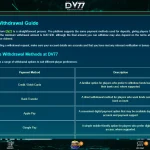
Cryptocurrency may appear alongside other deposit methods at offshore casinos, but availability and processing time can vary. A specialist review lists crypto, PayID, POLi, BPAY and cards as possible mobile deposit options; that is not a guarantee that every site offers them or that a particular method will work for your account.
The more important detail is what happens when you try to cash out. A specialist review reports that crypto withdrawals can be processed in less than 24 hours. Treat that as a reported processing timeframe, not a promise of when funds will be usable: the casino may have its own pending period, and the first withdrawal can involve extra checks.
That first cashout is often where KYC enters the picture. Be prepared to verify your identity with a selfie or ID and provide proof of address. If you leave this until after requesting a withdrawal, the review process can hold things up. I’ve learned not to confuse a payment option being displayed with the whole withdrawal route being clear. Small print matters.
Before depositing, check whether crypto is available for both deposits and withdrawals, whether the same method must be used in both directions, and what verification documents are required. A method shown at the cashier may be deposit-only. Read the withdrawal terms before sending money, not when you are waiting for it.
“Crypto-friendly” sounds like a simple perk. In practice, it only tells you that a crypto payment option may exist; it says nothing by itself about the withdrawal conditions or how long verification will take. Keep the distinction clear: a stated processing estimate is not a guarantee of arrival, and a fast payment method cannot resolve a dispute over a withdrawal. Check the actual terms first.
Use your mobile browser for the simplest option; most casinos that accept Australian players are accessed that way. If the casino offers a PWA, you can add it from the website as a home-screen shortcut, but avoid unofficial app downloads.
Yes, you generally use the same account on your phone and computer; switching devices does not require a separate mobile profile.
Playing at an offshore casino is not illegal for individual Australian players, but a licence badge alone does not guarantee a smooth or safe experience. Check the operator’s licensing claims, and avoid unofficial app downloads.
Yes, you can use the casino’s mobile website in your browser without installing an app. A PWA is optional, and not every site offers one.