Encryption may protect data, but it does not establish that an operator can legally offer online casino games in Australia.
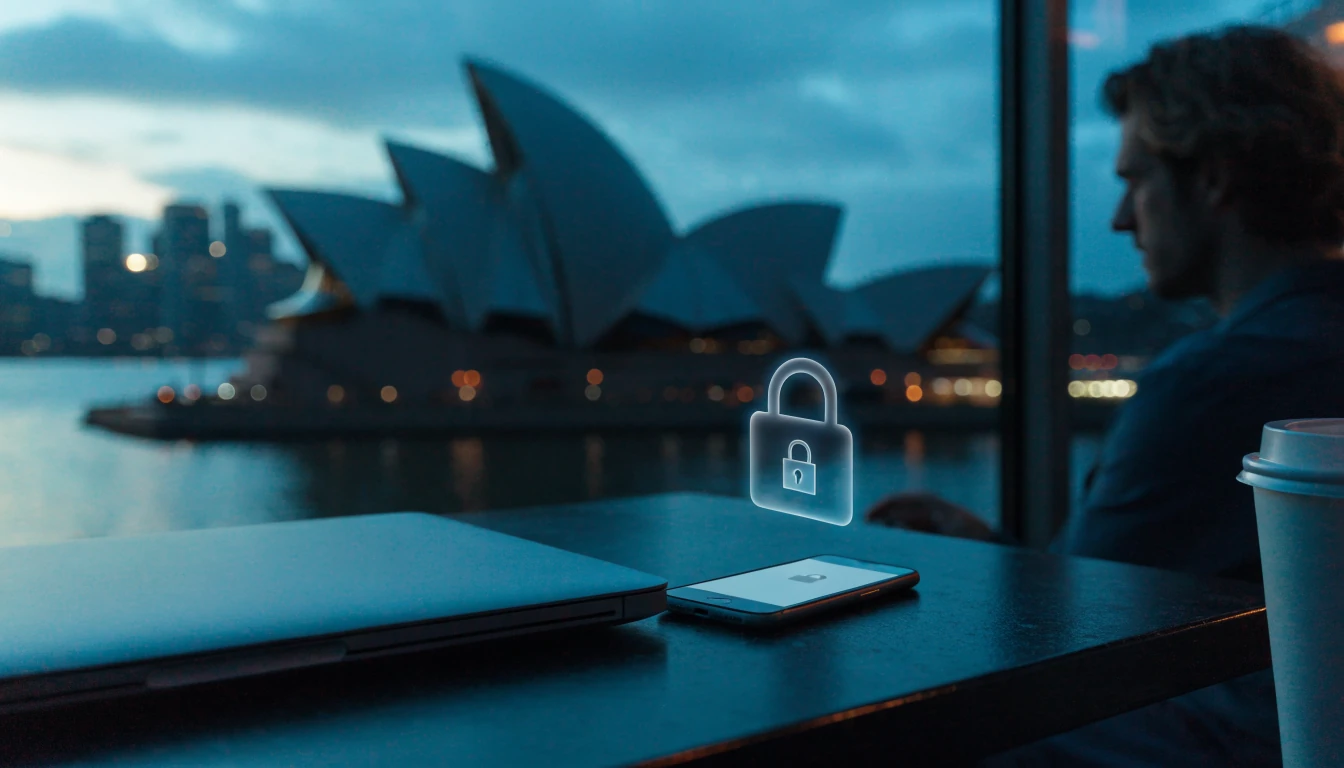
“Secure” sounds like one clear promise. It isn’t. A site can use technical measures to protect information and still be an unlawful service to offer in Australia. Those are separate questions, and mixing them up is how a polished homepage starts to look like proof of something it cannot prove.
When people talk about a secure casino online, they may mean that the connection is encrypted, personal details are handled carefully, or account access is protected. Those things matter. They describe aspects of how a website works; they do not establish whether the operator is allowed to provide online casino games to people in Australia.
The legal starting point is the Interactive Gambling Act 2001. It prevents operators based in Australia from offering online casino games to Australian residents. In other words, a site’s security features don’t change the rules about what services may be offered here. A reassuring design can’t do that work.
Casinos use SSL encryption to help protect transactions and sensitive information as it moves between a user’s device and a website. That is a useful technical safeguard: without encryption, information travelling across a connection could be more exposed. But encryption answers a narrow question about data transmission. It does not answer who is operating the site, what rules apply to it, or whether it may lawfully offer casino games in Australia.
I’ve learned not to let one visible sign do the work of several checks. A locked symbol in a browser, a tidy app, or a page that looks professionally made can make a service feel settled and dependable. That feeling is understandable. It is not a legal status.
Nor does a security feature tell you everything about how a service handles information once it reaches the operator. The fact that a connection is encrypted should not be stretched into a claim that every part of an account, payment, or business operation is safe. It means the connection has a protective measure. Nothing more should be assumed from that alone.
 No-Minimum-Deposit Casinos in Australia: Payment RulesLearn why a casino’s advertised no-minimum rule may not apply to every payment method, and why both the operator’s and provider’s limits…
 New Online Casino Sites in Australia: What to CheckLearn how to assess launch claims, offshore status and bonus terms, including wagering rules that can keep funds tied up.
There is technical safety, which concerns things such as protecting data during transmission. Then there is the broader question of whether a service is lawful to offer in this market. The word “secure” often gets used as if it covers both. It doesn’t.
The distinction matters especially when a page calls itself one of the most secure online casinos in Australia. That phrase can describe a site’s own presentation or a reviewer’s impression; it cannot override Australian law. A claim about encryption is not evidence of permission to operate. And a website’s availability on your screen does not, by itself, establish that it is authorised to provide the service.
ACMA—the Australian Communications and Media Authority—is the primary regulator of online gambling in Australia. Its role belongs to the regulatory picture, not the technical one. Keeping those categories apart helps: a technical feature is something about the website’s systems, while lawful provision is a matter of the rules governing the operator.
This is why I’d treat “secure” as a description to unpack, not a verdict to accept. What exactly is being called secure? Is the claim about the connection, the handling of information, or the legality of the service? Those are not interchangeable assurances. A site may point to an encrypted connection, but that alone does not make it a lawful place to play.
There is nothing wrong with caring about data protection. It would be strange not to. The mistake is treating a real technical safeguard as if it settles every other concern. A secure-looking site may still fall on the wrong side of the rules that apply to online casino services in Australia.
So when I see the word “secure,” I try to give it a smaller, more accurate meaning. Encryption can help protect information travelling across a connection. It cannot make a prohibited service permissible. It cannot turn a site’s own claim into proof of its legal standing. And it cannot make appearance a substitute for the law.
That’s the distinction worth holding onto before any design detail, badge, or confident wording starts to feel like reassurance. A security feature may be useful. It is not a green light.
Attention: A security feature like encryption is a technical safeguard, not a legal green light or proof that a service is authorised to operate in Australia.
When I used to see “safe and secure” beside a real-money casino, I treated it as a practical question: would the site protect my details, and would it pay if I won? That misses the first question for anyone in Australia: may the operator offer those casino games to people here at all?
Under the Interactive Gambling Act 2001, operators must not provide online casino games to Australian residents. That includes real-money casino-style play offered to people physically in Australia. A polished website, a foreign licence or a reassuring security claim does not change that Australian legal position. Secure technology and permission to offer a service are different things.
The law’s focus here matters. The Act prohibits operators from offering these games to Australian residents; it does not explicitly criminalise an individual player for using an offshore casino site. That distinction can be easy to lose in online discussions. It does not mean that an offshore service is authorised in Australia, or that the law gives you the same protections you might expect from a service legally operating here.
So if you are weighing up a secure online casino for real money, do not treat “the player is not explicitly criminalised” as a green light. It describes the way the law treats the operator and the individual differently. The operator’s restriction remains, and the player may still face very practical problems if a dispute arises.
That is where the word “secure” can mislead. It may describe a site’s handling of information or transactions, but it cannot promise that an Australian authority will resolve a dispute over your account. An offshore service that is not authorised to offer online casino games to Australians lacks the consumer protections attached to a lawful local service. If it withholds winnings, Australian law may not help you recover them.
That last point is the one I would keep in front of me before depositing. A balance displayed on a screen is not the same as money in your hands. If the operator refuses a withdrawal or closes an account, a claim that the site is “safe” does not itself create a route to a remedy. The legal setting is not repaired by a convincing design or a reassuring line in the footer.
I used to put too much weight on the operator’s own words. “Trusted” could mean nothing more than a label the business had chosen for itself. A security badge, terms page or promise about fair treatment may tell you what the site wants you to believe, but it does not establish that the operator can legally offer casino games in Australia. Nor does it turn an offshore service into one with Australian consumer protections.
This is why the question is not simply whether an online casino looks secure enough for real-money play. You need to separate technical reassurance from the legal relationship. The Act bars operators from providing online casino games to Australian residents; the fact that individual players are not explicitly criminalised does not remove that restriction or make an unlicensed service locally protected.
Legal Risk
Offshore services lack Australian consumer protections, meaning you may have no local remedy if a site withholds your winnings.
There is no tidy wording that makes those two points cancel each other out. One concerns what the operator may offer; the other concerns whether the individual player is explicitly made a criminal for using an offshore site. They are not the same rule. And neither turns a dispute about withheld winnings into an easy one to solve.
I know the temptation to start with the deposit and ask legal questions later. I did that kind of mental arithmetic myself: if the site seemed professional, I assumed the hard part had been handled. It hadn’t. Before considering any real-money online pokies or casino games, take the Australian restriction seriously and think about what happens if the operator does not honour a withdrawal. “Secure” is not a legal safety net.
No local remedy guaranteed.
A payment button tells you how money might leave your account. It tells you much less about how, or whether, it can come back. I learned to treat “instant” as a description of one step in a transaction, not a promise about the whole trip.
A specialist gambling review describes PayID transfers as moving through the New Payments Platform and potentially clearing quickly, sometimes within minutes after a payment is released. That timing needs careful reading: “after release” is not the same as after you request a withdrawal. A service may first review or approve a request, and only then send the payment. The transfer speed cannot tell you how long that earlier stage will take.
The same specialist-review material says PayID and some e-wallet payments can be quick once approved, while bank transfers and card payments can take several business days. Those are reported possibilities, not a timetable you can rely on for a particular account. The payment provider, the operator’s processing and the point at which a request is approved all matter. A fast deposit is no evidence that a withdrawal will be equally fast.
That distinction is easy to miss when a deposit screen makes a method look simple. You choose a route, authorise the payment and see the balance update. With a withdrawal, the route may be different: the method you used to pay may not accept money back, or may not be available for withdrawals at all. Check the withdrawal options and conditions before sending money, rather than assuming the deposit method works both ways.
POLi is described in specialist gambling reviews mainly as a way to deposit. Don’t assume it will also be offered for withdrawals. Card withdrawals can be slower, or unavailable, depending on the processor, according to the same kind of review material. If a card route is unavailable, the service may require another payout method. That can add another step and leave you waiting while you work out what is actually supported.
None of this makes a payment route “secure” in the sense many people mean: secure from a dispute, a blocked payment or a withheld payout. Payment technology can move money; it cannot make an unlicensed gambling service accountable to you. Unlicensed services lack Australian consumer protections, and Australian law may not help if winnings are withheld. A familiar bank transfer or a polished payment page does not change that.
I’d be wary of claims that a PayID option makes a casino safe. The payment method and the service accepting it are separate things. PayID itself does not confirm that a gambling service may legally offer casino games to people in Australia, and a quick transfer is not proof that a withdrawal will be honoured. That is the awkward part.
If you are checking payment terms, look for the withdrawal method, any approval stage and what happens if the original deposit route cannot receive a payout. Read those details before making a payment, not when you are trying to get money back. If the terms are vague, contradictory or hard to find, treat that as a reason to stop rather than a puzzle to solve after depositing. And don’t mistake a payment logo for a guarantee.
When you’re choosing an online casino in Australia, checking its stated licensing and any available payment details can help you assess what to investigate further. Use these brief notes as a starting point, not as a guarantee of security.
Bizzo Casino
Bizzo Casino lists a Curacao Gaming Control Board license under TechSolutions Group N.V. This licensing detail gives you a specific point to check when researching the operator.
Playfina Casino
Playfina Casino lists a Curacao eGaming license held by Hollycorn N.V. since 2017. Its minimum deposit is A$20–30, depending on the offer.
DragonSlots Casino
DragonSlots Casino lists a Curacao Gaming Authority license under Jumpman Gaming Ltd. You can use this information as a starting point for checking its licensing.
Wild Tokyo
Wild Tokyo lists a Curacao license and states a minimum deposit of A$10. Its stated payout times are 30–60 minutes for crypto and 1–5 days for fiat.
JustCasino
JustCasino lists a Curacao Gaming Control Board license. That licensing information is the main stated detail available for your assessment.
Roby Casino
Roby Casino lists a Curacao eGaming license held by Roby Games Ltd. This gives you a licensing detail to verify as part of your research.
Vegaz Casino
Vegaz Casino lists license number OGL/2024/1335/0780 from Curacao. Its stated minimum deposit is EUR 20.
Rollero Casino
Rollero Casino lists a Curacao Gaming Control Board license, OGL/2023/176/0095, held by Hollycorn N.V. The listed license details offer a specific starting point for your checks.
SkyCrown
SkyCrown lists a Tobique Gaming Commission license and a minimum deposit of A$30. Its stated payout times are around 10–15 minutes for crypto and 1–5 days for fiat.
Golden Pokies
Golden Pokies lists a Curacao license. No further operator details are provided here, so you’ll need to look beyond this listing to assess it.
I used to give a polished homepage more credit than it deserved. A tidy layout, a security badge and a confident “best” label can make a site feel checked out. They don’t establish that it is authorised to offer online casino games to people in Australia.
That distinction matters. A site may use SSL encryption to protect information sent between your device and its servers. That is a technical safeguard, not proof of Australian authorisation. A padlock in the browser, or a claim that transactions are encrypted, tells you nothing by itself about whether the service may legally offer casino games here.
Rankings are no better as evidence. A page can call something the best secure online casino, or put it near the top of a list, without showing that ACMA has authorised it. The ranking may reflect how the page was assembled, not a regulator’s decision. I learned to stop treating confident design as due diligence. Nice badge. Still just a badge.
ACMA’s public register is the place to check whether a wagering service holds a valid Australian licence. Use the register itself, not a screenshot, logo or link on the casino’s own page. A claim is easy to display; the official record is the thing to verify.
Be precise about what you are checking, too. A wagering licence should not be read as permission to offer online casino games. In Australia, online casino games are prohibited for operators to provide to local residents. So a site describing itself as a licensed betting service does not thereby establish that its casino section is authorised. Different service, different question.
This is where “secure online casino website” can blur two separate ideas. A page can look technically protected while still not being a lawful place for Australians to play. Likewise, an overseas licence or a claim of international approval is not the same as being licensed in Australia. The wording can sound official without answering the local question.
I’d also be wary of lists promising the top secure casinos or fast payouts. A ranking cannot certify legal status, and a payout claim does not replace checking the register. Don’t let a list do the regulator’s job for you.
If a service’s status is unclear, don’t fill in the gaps with the site’s own assurances. Check ACMA’s public register for the relevant wagering service, and don’t treat an absent or unrelated listing as proof that casino games are authorised. For this market, that distinction is the whole point—not a footnote under a badge.
A welcome bonus can make a casino page look as though it has been prepared for Australians. The wording may mention local players, Australian dollars or familiar payment options. That presentation does not change what the service is allowed to offer here.
Under the Interactive Gambling Act 2001, a domestic operator cannot provide online casino games to people in Australia. Online slots and casino games such as blackjack are illegal here. So a promotion attached to those games is not proof that they are a lawful Australian offer. A local flag on the page is just a flag.
I used to treat a polished offer as a kind of reassurance: if a site seemed to address my country directly, I assumed someone must have checked that it belonged here. That was a bad shortcut. A bonus is a marketing device, not evidence of Australian authorisation. “For Australians” can be a line of copy; it does not make prohibited games lawful.
The same applies to searches for secure pokies with a bonus or a welcome offer. The words can point you toward pages that look locally tailored, but they cannot settle the legal question. If the offer is for online slots, the relevant issue is not whether the bonus looks generous or the site looks tidy. It is that online slots are among the casino-style games that cannot legally be offered to people in Australia.
That distinction matters because a bonus can pull your attention toward the attractive part of the page and away from the basic context. I know how easy it is to focus on the bright button and skim past everything else. But no offer can turn an unlawful service into a lawful one. No welcome message changes the rules.
If you are weighing whether an online casino is safe for Australians, start by separating appearance from permission. A page may use Australian language, show a welcome promotion and call itself secure. None of those things establishes that the games can legally be offered here. And a promotion is not a substitute for an Australian licence.
There is a further boundary: advertising real-money online casino services to Australian audiences is not permitted. That means a bonus aimed at local players should not be treated as an ordinary domestic promotion simply because it is visible from Australia. Visibility is not approval.
I would read the offer as a signal to pause, not an invitation to deposit. The legal context comes first. The gloss can wait.
A wallet can make a payment feel simple; it does not make the account anonymous. Before a withdrawal, an online casino may run know-your-customer checks to confirm who you are and whether the payment route belongs to you. That can mean providing photo identification, proof of your address and evidence that you own the card or account used to pay.
KYC Requirements
Verification may require providing photo identification, proof of address, and evidence of ownership for the payment method used.
I used to think verification was just a box to tick on sign-up. The awkward part is that it can matter later, when you are trying to withdraw. If the name or details on your account do not match your documents or payment method, the operator may ask for more information before processing the request. So check what name is attached to each payment method and keep your account details consistent. Less back-and-forth.
This is separate from whether a wallet or casino site uses technical safeguards. An encrypted connection can protect information while it is sent, but it does not prove who controls the account, settle a dispute about ownership or guarantee that a withdrawal will be honoured. “Secure wallet” is a tidy label, not a substitute for checking what verification the service requires and what happens if you cannot complete it.
Timing can also depend on what happens after approval. A specialist review describes PayID and some e-wallet withdrawals as potentially quick once approved, while bank transfers and card withdrawals may take several business days. Treat that as a description from a review, not a promise for your account: payment routes and processing can vary. The approval step itself is the part people often overlook.
There is a more basic problem for Australians. The Interactive Gambling Act 2001 prohibits operators from providing real-money online casino games to people in Australia. An offshore service’s identity checks do not make it licensed in Australia, and an unlicensed service does not provide the consumer protections of an Australian-authorised casino. If it withholds winnings, Australian law may not help you recover them.
So when you see claims about secure e-wallet casinos, separate the questions: what documents might be requested, whether the payment method is yours, and whether the service is allowed to offer casino games here. A smooth verification process answers only the first two, and not necessarily completely. It cannot turn a prohibited service into a safe place to play.
I used to treat a deposit limit as proof that a gambling site had its act together. It looked like a sensible guardrail: decide what you can afford, set the cap, and carry on. I’ve since learned that a useful wellbeing feature answers only one question. It does not tell you whether the service may legally offer online casino games to people in Australia.
The legal line matters. The Interactive Gambling Act sets responsible-gambling obligations for licensed operators, but online casino games cannot lawfully be offered to people in Australia. A site showing limits or support links does not become lawful because those features look responsible. Two separate things. Easy to blur when the page is polished.
A specialist review describes casino deposit limits that can be set for daily, weekly or monthly periods. Treat that as a description from a review, not as a promise that every site offers those controls, or that the controls will work the same way everywhere. If you are already using a service, look for whether a limit is clear and meaningful to you. Don’t rely on a control you cannot understand or find.
The more personal question is whether gambling is starting to take more from you than money. If you find yourself raising a limit after deciding not to, chasing losses, hiding how much you spend, or feeling tense when you try to stop, pause and get support. You do not have to wait for a crisis before talking it through.
Support Tip: If you feel under pressure, use a professional independent support service directly rather than relying on an operator's tools.
Reputable gambling services provide information about gambling-related harm and point people towards professional support available across Australia. That can be useful, but a link on a casino site is not the same thing as independent help. If you feel under pressure, use a professional support service directly rather than treating the operator’s tools as your only safety net.
I’ve made the mistake of confusing a considerate-looking feature with protection in the broader sense. A limit may help you manage your behaviour; support information may help you find someone to talk to. Neither changes the legal status of online casino gambling here, and neither guarantees that an offshore service will protect your interests. Good tools, separate issue.
A polished mobile screen can make a game feel transparent without telling you much. The useful detail, if it is shown, is usually tucked away in the game’s own information or help screen. Look for an “i” icon or a menu button; that is where a pokie may display its return to player, or RTP.
RTP is a game’s stated return figure, not a promise about what will happen in a particular session. It cannot tell you whether a short run will pay out, and it is not proof that a site is secure or authorised. I used to treat a tidy interface as a kind of reassurance. It isn’t. The number needs context.
One detail that is easy to miss: the same game title can be released in different RTP versions. The operator chooses which version to run, so recognising a familiar name or design does not establish which version is on screen. Check the information attached to that specific game rather than relying on a description elsewhere. If the displayed figure is unclear or absent, don’t fill the gap with assumptions.
That is a narrow check, not a fairness certificate. A mobile layout may make the help screen awkward to find, but it does not change what the listed information can prove. Read the game’s own details, note the RTP shown, and keep separate what you can see from what you cannot infer from it. A figure on a screen is not a guarantee of an outcome.
There is a more important boundary for Australians: online slots and casino games such as blackjack are illegal when provided to people here. So this is not a recommendation to find or play mobile pokies, nor does checking a game’s information make an online casino safe or lawful. It only explains what a displayed game detail can—and cannot—tell you.
Gloss is easy. Context takes a tap.
A site describing itself as Canadian, or displaying a Canadian licence badge, doesn’t tell you whether it can lawfully offer casino games to someone in Australia. I’ve learned not to treat a flag, a polished page or the word “secure” as a substitute for checking what actually applies where I am.
If you’re in Australia, the Australian framework is the one that matters to your access. The Interactive Gambling Act 2001 prohibits operators from offering online casino games to Australian residents. A business’s claimed connection to Canada does not change that Australian rule.
Warning: Using a VPN to access a casino may lead to voided winnings, account closure, and the loss of your deposit.
I can’t establish from a site’s Canadian branding whether it holds a valid licence there, what protections that licence provides, or whether those protections would help an Australian customer. Those are separate questions, and a claim on the site itself is not proof. Don’t assume that a service available to someone in Canada is authorised to serve you here.
That distinction is easy to miss when a page calls itself a “secure Canadian online casino”. The phrase may sound reassuring, but it does not settle the legal position in Australia, confirm the operator’s status in Canada, or promise that you can recover money if a dispute arises. Secure-looking branding is not a legal answer. Not even close.
I’d be especially wary of trying to make the location issue disappear with a VPN. Using one to access a casino may lead to voided winnings, account closure and loss of your deposit. That is a real downside to weigh before you hand over payment details or create an account; it isn’t a clever workaround.
The same caution applies if you’re comparing claims about Canadian casinos from an Australian connection. Check what the claim actually establishes, and don’t read a foreign licence as permission to offer online casino games here. If you can’t tell what applies to your situation, pause rather than relying on a site’s own assurance.
I’ve made the mistake of letting a tidy interface do too much of the convincing. This time, I’d keep the questions separate: what rules apply in Australia, what the operator can prove about its Canadian status, and what could happen if it disputes a withdrawal. If those answers aren’t clear, the word “secure” won’t fill the gap.
A site disappearing from your connection can feel like a technical glitch. I’ve been tempted to treat it that way: refresh, try another browser, assume the problem is mine. But when an online casino is blocked, it can be an enforcement signal, not a puzzle to solve by finding another route.
ACMA oversees online gambling rules in Australia. It can ask internet providers to block websites that offer prohibited interactive gambling services to Australian customers, as well as unlicensed services offered to adults here. ACMA can also issue fines to operators that breach the Interactive Gambling Act 2001. That is not a routine review badge or a customer-service dispute. It is regulatory action.
There is an important distinction: ACMA can request website blocking, while a blocking order is available as a last resort when customer safety is considered at risk. A block is therefore not a general rating system for every secure casino site. It does not tell you that every unblocked site is safe, either. It tells you that access to a particular service has been targeted under the enforcement framework.
That matters when a site markets itself as a secure internet casino. A polished page, an encrypted connection or a reassuring message cannot cancel out an enforcement signal. Nor should a blocked page prompt you to search for a substitute domain or workaround. If access has been blocked, take the hint rather than treating it as an inconvenience to bypass.
I’d check ACMA’s own information if I wanted to understand the status of a site, rather than relying on the site’s explanation for why it has vanished. A casino can blame a provider, describe the interruption as temporary, or point to a different address; none of that overrides what the regulator says.
Blocking also has limits as a signal. It does not certify every service that remains reachable, and it does not turn the absence of a block into proof of safety. That’s the bit I used to miss. No block is not a green light.
If a service is blocked, stop there. Trying to get around it may expose you to more risk, not less. Take the warning seriously.
PayID and some e-wallet withdrawals can be quick once approved. Bank transfers and card withdrawals can take several business days, and cards may be slower or unavailable depending on the processor.
Australian law prohibits operators from offering online casino games to residents, but it does not explicitly criminalise individual players for using offshore sites. That does not make those services authorised or give you the protections you might expect from a service legally operating in Australia.
You may be asked for photo ID, proof of address and proof that you own the payment method used. Identity checks are commonly required before withdrawals.
Payment options can include PayID, e-wallets, bank transfers and cards. POLi is mainly used for deposits, so do not assume it can be used for withdrawals.
Licensed operators are required to follow responsible gambling rules, and licensed online casinos provide daily, weekly or monthly deposit limits. Reputable platforms also offer information about gambling-related harm and direct you to professional support services in Australia.