Venue opening hours, gaming-area availability and other practical checks can help distinguish confirmed details from search listings.
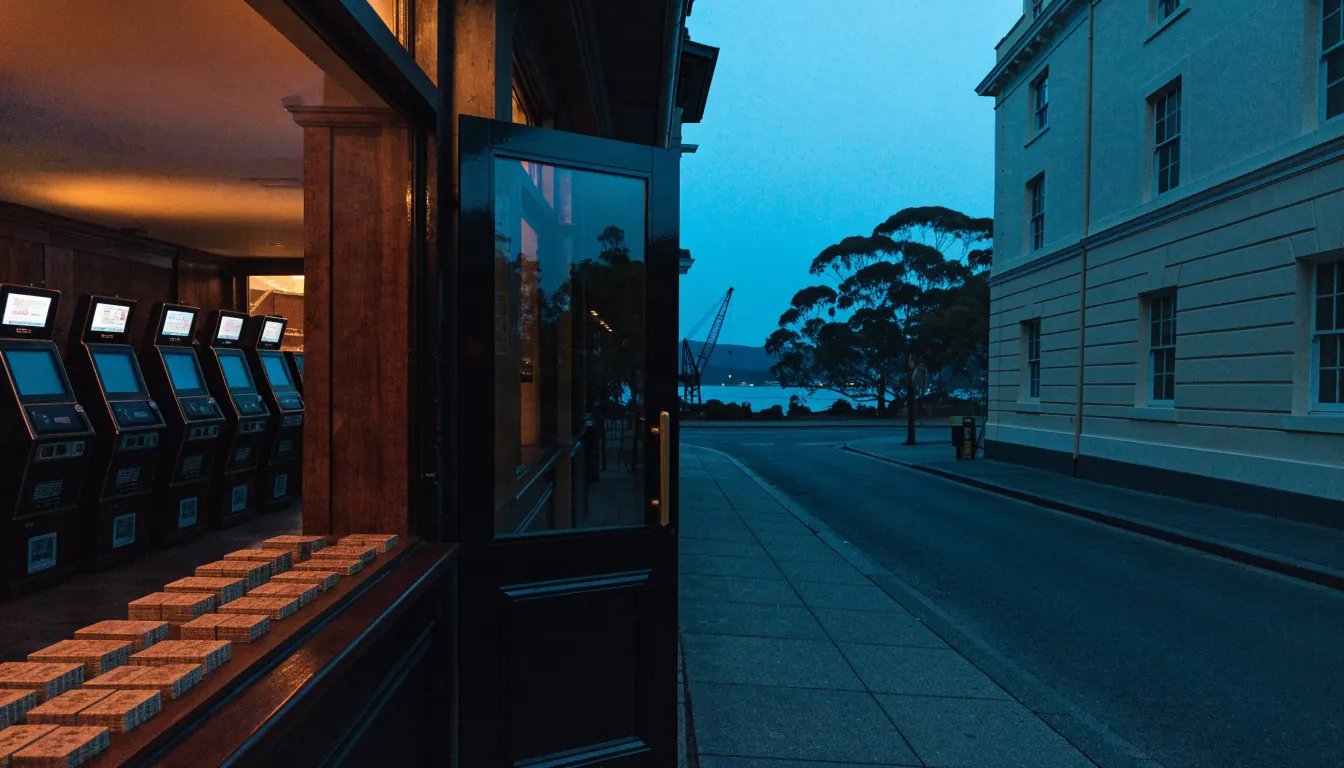
Before setting out, check the venue itself rather than treating a search result as confirmation. A listing can show an address and a phone number while saying little about whether the doors are open today, whether the gaming area is available, or whether anything has changed since the listing was updated. I’ve learned not to make the trip on the strength of a map pin alone.
Start with the venue’s own website or its official social media page. Look for a current notice about a closure, a private function, maintenance, or a temporary change to services. Check that the page belongs to the venue, not a directory repeating information from somewhere else. If a page has no recent updates, that does not prove it is wrong; it just means it cannot settle the question.
Then call. It is the plainest way to check whether the venue is open at the time you intend to arrive and whether the pokies area is operating. Be specific: ask about today, your expected arrival time, and the gaming area rather than only asking whether the venue as a whole is open. A restaurant, bar, or club can have different arrangements from its gaming area, so one answer may not cover both.
If nobody answers, avoid filling the silence with an assumption. Try another official contact channel, check for a recent notice, or wait and call again before leaving. A missed call could mean the venue is busy, the phone is unattended, or the information is simply unavailable. It is not a reliable yes or no.
Map services and business directories are useful for finding contact details, but their displayed status can lag behind a venue’s own updates. “Open” may refer to the business generally, not necessarily the pokies area. “Closed” may also be an old listing that has not been corrected. Look for when the information was updated and compare it with a direct source.
Be wary of snippets that appear without context. A search result may combine old hours, an address, and a third-party description in a way that looks more definite than it is. Open the source page, check the date of any notice, and confirm with the venue if your journey depends on it. A confident label is still only useful if it reflects the current situation.
The same applies to posts and comments from other visitors. They can indicate that someone was there at a particular time, but they cannot confirm what you will find when you arrive. Conditions change. A photo, review, or old discussion is a record of an earlier visit, not a live status update.
When you get through to staff, keep it direct. You could ask: “Are the pokies available when I arrive?” If the answer is unclear, ask whether the gaming area is open separately from the rest of the venue. If you are travelling a long way, repeat the expected arrival time and ask whether anything is likely to affect access then.
That is more useful than asking only whether the venue is “open now”. “Now” can be misleading if you will not reach the place for a while. A venue may be open when you call but not when you arrive; equally, an online listing that currently says “closed” may not reflect a later opening. Confirm the time that matters to your trip.
If the venue gives you a clear answer, note who or what confirmed it and when. That is not a guarantee that circumstances cannot change, but it gives you a better basis for deciding whether to leave. If the answer is uncertain, consider postponing the trip instead of relying on a guess.
A broad search for pokies in Tasmania can turn up names, old listings, and pages that are not official venue sources. A name that sounds familiar is not proof that a venue is in Tasmania, that it offers pokies, or that it is open. Check the location and contact details against the venue’s own information before making plans. If a result mentions Crown, for instance, the name alone is no reason to assume there is a Tasmanian venue or that it has pokies available.
There is one further detail worth confirming directly if it affects your decision to visit. A report published by regionriverina.com.au describes a requirement from 1 July for venues with more than 20 gaming machines to have a dedicated responsible gambling officer on duty while those machines operate. Ask the venue how this applies to its current arrangements rather than assuming that a general report tells you what is happening at a particular place.
In the end, I’d trust a current answer from the venue over an old listing, a search snippet, or somebody else’s account of a past visit. It takes another check, but it is better than travelling on a guess.
Choosing pokies in Tasmania for 2026 starts with checking which operators suit your needs and what their stated details tell you. Use this list as a reference, and check the current terms and availability before you play.
Bizzo Casino
Bizzo Casino lists the Curacao Gaming Control Board (TechSolutions Group N.V.) as its licensing authority and company. This gives you a specific licensing detail to consider.
Playfina Casino
Playfina Casino lists Curacao eGaming licensing under Hollycorn N.V., dating from 2017. Its minimum deposit is A$20–30, depending on the offer.
DragonSlots Casino
DragonSlots Casino lists the Curacao Gaming Authority and Jumpman Gaming Ltd. as its licensing and company details. These are the stated facts to consider when reviewing the operator.
Wild Tokyo
Wild Tokyo lists a Curacao licence and a minimum deposit of A$10. Its stated payout speeds are 30–60 minutes for crypto and 1–5 days for fiat.
JustCasino
JustCasino lists the Curacao Gaming Control Board as its licensing authority. That licensing detail is the main information provided about the operator.
Roby Casino
Roby Casino lists Curacao eGaming licensing under Roby Games Ltd. This provides a specific licensing detail for your consideration.
Vegaz Casino
Vegaz Casino lists licence number Curacao OGL/2024/1335/0780. Its stated minimum deposit is EUR 20.
Rollero Casino
Rollero Casino lists Curacao Gaming Control Board licence OGL/2023/176/0095, held by Hollycorn N.V. This gives you a specific licensing reference when assessing the operator.
SkyCrown
SkyCrown lists the Tobique Gaming Commission as its licensing authority and a minimum deposit of A$30. Its stated payout speeds are about 10–15 minutes for crypto and 1–5 days for fiat.
Golden Pokies
Golden Pokies lists a Curacao licence. This is the main operator detail provided here for you to consider.
“Best paying” sounds like a clean comparison: find the pokie with the biggest return figure and you’ve found the one most likely to pay you. I used to read claims like that as if they were a forecast. They aren’t. A return percentage describes a theoretical pattern across a very large volume of play, not what you should expect from your own session. It can’t tell you whether the next spin will win, or whether you’ll leave ahead.
That distinction gets lost in words such as “high return”. The phrase may describe a game’s published RTP, but it doesn’t mean the game is about to pay, or that it will return a particular share of your money during a visit. Your experience is a small slice of play, where results can swing sharply. The long-run figure and the outcome in front of you are different things.
I had to learn that the unglamorous way: a percentage on a screen can feel reassuring, but it doesn’t make a losing run less possible. Nor does a run of losses mean the game owes you a win. A number is not a promise. Keep that in view when comparing pokies in Tasmania, whether you’re considering a venue in a city centre or looking at a game description elsewhere.
There’s another wrinkle: the return figure may not be identical wherever a game appears. A specialist review reports that some game providers give casinos a choice of RTP settings for the same pokie. If a casino selects one setting and another casino selects a different one, the title alone won’t tell you which return applies.
That doesn’t mean every game has several settings, or that every venue makes the same choices. It does mean you shouldn’t assume a figure you saw attached to a title automatically applies to that title everywhere. If a return figure matters to your comparison, check that the information refers to the actual version and setting available where you intend to play. If you can’t confirm that, treat the figure as incomplete rather than filling in the blank with an assumption.
This matters when people talk about the “best paying pokies” as if there were one fixed Tasmanian list. A game name is not enough to establish its return setting, and a headline figure is not enough to predict a result. I’d rather know what the figure refers to than build a decision around a label that sounds precise.
RTP can still be useful as a comparison point when its meaning and setting are clear. It gives you information about the game’s designed return over extensive play, rather than a promise about your personal outcome. Think of it as context, not a target. A larger published return does not guarantee a better session, and a smaller one does not tell you what your next spin will do.
Return to Player (RTP) describes a theoretical pattern across a very large volume of play, not a personal forecast or a guarantee for a single session.
Each spin is decided by a Random Number Generator, so one result doesn’t carry a memory of the previous one. That is why chasing a loss because a game “must be due” is a bad reading of what the return figure means. Past spins don’t turn a theoretical measure into a schedule for future wins. No debt is building up.
When checking claims about Tasmania casino pokies, I’d separate three questions: what return figure is being quoted, which setting it describes, and what that figure can reasonably tell you. If the setting isn’t clear, the comparison may not be like for like. If the claim implies that you’ll get a certain outcome, it’s promising more than an RTP can support.
The same caution applies to online descriptions of pokies associated with Tasmania. A game page may present a percentage in bold, but presentation doesn’t change what the measure represents. It remains a long-run theoretical figure—not a personal forecast, not a guarantee, and not a reason to assume a win is close.
So when you hear “best paying”, translate it into something less persuasive: a claim about a return setting, if the setting is stated and applicable. That’s useful information, but it’s narrower than the phrase suggests. I still look at figures. I just don’t let them talk me into believing they know what my next session will bring.
A map pin can make a venue look like an easy stop between the airport and your accommodation. I’ve learned not to treat that first impression as a travel plan. Tasmania has more than one airport and several places people may mean when they say “the CBD”, so start by pinning down the exact airport, destination and venue—not just the broad area.
Search results can mix places with similar names, old listings and businesses that are not pokies venues. Before setting off, open the venue’s own listing or contact it directly to confirm its street address. Then check the route in a current map app, using your actual arrival point and the time you expect to travel. A distance shown from an airport terminal may not reflect the route you will take, and a CBD result may refer to a different town or city.
I wouldn’t book transport based only on a phrase such as “near the airport”. Check whether the route involves a direct drive, public transport, a transfer or a walk from the nearest stop. If you’re hiring a car, confirm where you need to collect and return it; if someone is picking you up, agree on the precise meeting point. Airport layouts and road access can make a short-looking trip less straightforward than it appears on a screen.
Pin the address first.
For a trip toward a city centre, put the accommodation or meeting place into the map as well as the venue. That makes it easier to see whether visiting would mean a small detour or crossing town. “Near the CBD” is not a useful measure on its own: the word can cover a broad area, and two pins that both carry that label may still be inconveniently far apart for your plans.
If you’re travelling in northern Tasmania, use the town you will actually be in rather than assuming a result marked “north Tasmania” is close to your route. The same goes for a location described as being near Tasmania: map listings may use broad regional labels that say little about travel time. Check the address against the place you are staying, and make sure the map is routing from the right airport rather than from a default location.
Keep a fallback in mind. A venue visit should not force you into a rushed transfer or an unfamiliar walk because a map result looked close. If the route depends on a connection, late arrival or lift from someone else, check those arrangements before leaving the airport. I’ve made the mistake of counting the pin as the whole plan. It isn’t.
One other practical point: gambling in Australia is for adults aged 18 and over. If you are travelling with someone younger, don’t plan the stop as an activity for the whole group; sort out your arrangements without assuming they can enter or take part.
Use the airport and destination as the start and end points, then verify the venue address and route directly before you travel. That is a better basis for deciding whether a stop fits your journey than a vague promise of being “nearby”.
“Best” can mean a lot of things: a comfortable club, clear house rules or staff who can explain what support is available. I wouldn’t treat a polished room or a promotional sign as proof that a venue is a good fit. Before settling in, I’d check the practical details and whether I’d feel able to ask for help if I needed it.
Start with the venue’s own rules. Ask staff where you can find information about responsible gambling, what help is available on site and how to raise a concern. Deposit limits, loss limits, session time limits and self-exclusion are recognised responsible-gambling tools, but don’t assume every venue offers them in the same way. Ask what applies there and how to use it.
You can also ask whether there is a responsible gambling officer on duty. A report published by regionriverina.com.au describes a requirement for venues with more than 20 gaming machines to have a dedicated responsible gambling officer while the machines are operating, beginning from 1 July. The report also describes a one-month grace period for venues to remove signage and introduce those officers. As that is a report rather than confirmation of the rules at a particular Tasmanian venue, check directly with the venue or the relevant Tasmanian authority before relying on it. Details matter.
The same report says venues will be required to keep a gambling incident register, including records of situations where a patron’s behaviour suggests they may be at risk of, or affected by, gambling harm. That is an operational record, not a promise that every concern will be handled in a particular way. If you’re worried about yourself or someone with you, speak to staff directly and ask what support they can provide.
Take a look at how information is presented around the venue, too. Responsible-gambling notices should not direct patrons towards gaming areas from the vicinity of ATMs or EFTPOS terminals, or direct them towards ATMs from the area around machines. If you see signage that seems to do that, raise it with management rather than assuming it reflects a safeguard.
Attention: Do not assume a friendly welcome or a polished room is proof of a venue's suitability; always verify the available responsible-gambling tools and support first.
I’d also check whether the venue’s rules are easy to find and whether staff can answer basic questions without steering you towards more play. That tells you something useful about the experience, though it does not predict what you’ll win. I’ve learned not to confuse a friendly welcome with a reason to stay longer.
A short checklist helps: find the house rules, ask what support is available, and confirm who to speak to if something feels wrong. If the answers are vague, you can leave. No grand claim needed.
A question about pokies aboard the Spirit of Tasmania is a question about the ship. A question about playing online for real money is a question about Australian law and the operator behind a website. They can get tangled together in a search, but they are not interchangeable.
I wouldn’t treat a page, forum post or offer that mentions the ferry as proof that pokies are available on board. Nor would I assume a casino result with “Tasmania” in its name is a Tasmanian venue. Names and location terms can be used loosely online. If you’re asking about facilities during a sailing, check with Spirit of Tasmania directly for current information; don’t rely on a third-party listing to settle it.
That’s separate from searches mentioning Crown and Tasmania. A name in a phrase doesn’t establish that a particular casino or pokie venue is in Tasmania, or that it’s connected with the ship. I’d want a clear, current statement from the venue itself before treating either point as fact.
The online question has a firmer answer. The Interactive Gambling Act 2001 prohibits companies from providing real-money online pokies to people in Australia without a domestic licence. No such licences have been issued, and there is no Australian-licensed online casino. So a website offering real-money pokies to Australians is not made locally licensed just because it accepts Australian customers, uses familiar language or displays a foreign licence.
“Bonus” can sound like a harmless free extra. It is still an offer attached to a real-money gambling service, and it doesn’t change the legal position. A no-deposit offer is not a way around the rules, and it is not evidence that a site is safe or backed by Australian protections. I’ve learned not to let the word “free” do the thinking for me.
The practical risk is more than losing a deposit. If an offshore casino refuses to pay winnings, Australian players have no legal recourse in Australia against it. That leaves you depending on the operator’s own terms and decisions, rather than a local online-casino regulator you can turn to for help. A polished site or a familiar-sounding brand doesn’t remove that problem.
So keep the two questions apart: ask the ferry operator about what is available on the ship, and understand that real-money online pokies offered to Australians have no domestic casino licence behind them. A result blending the two topics doesn’t prove either one. Separate questions. Different risks.
“24-hour” sounds simple: arrive whenever you like and expect the machines to be running. I wouldn’t treat those words as a guarantee. They may describe a listing or a general claim, not the status of a particular venue at the time you plan to go. A venue’s hours and the hours when pokies are operating are not necessarily the same thing.
A report by regionriverina.com.au states that from 1 July, venues with more than 20 gaming machines must have a dedicated responsible gambling officer on duty while machines operate.
If you’re looking for pokies in Tasmania late at night, check directly with the venue before setting out. Ask whether it is open at the time you intend to arrive and whether its pokies will be available then. Be specific: “Are the pokies operating now?” is more useful than asking only whether the venue itself is open. If you’re planning ahead, confirm the hours for that particular day rather than relying on a general description.
I’ve learned not to turn a confident label into a travel plan. “Open all day” can read like a promise, but what matters is the answer from the venue. If you can’t get a clear confirmation, don’t assume the machines will be available. Frustrating, but better than arriving to find out the wording meant something narrower than you thought.
There’s also an oversight point worth separating from opening hours. A report published by regionriverina.com.au says that, from 1 July, a venue operating more than 20 gaming machines is required to have a dedicated Responsible gambling officer (RGO) on duty while those machines are running. That requirement concerns oversight during machine operation; it does not establish that any venue operates around the clock, or that its machines are running whenever its doors are open.
So, when someone describes a place as having “24-hour pokies,” check what they mean. Is the venue open at all hours, or are they claiming the machines themselves operate at all hours? Then confirm the relevant detail with the venue. A broad label can’t answer that for you.
For a same-night plan, make the call close to when you expect to arrive. For a later visit, check again nearer the day, since a general listing may not reflect the hours that apply then. Keep the answer plain: venue open, pokies operating, and the time you can expect that to be true.
That’s the useful distinction. A round-the-clock claim is a reason to ask, not proof that the doors are open or the machines are available. Check first. Skip the wasted trip.
A run of wins can make it feel as though a machine has found a rhythm. A stretch of losses can make the next spin seem overdue. I’ve caught myself reading both patterns as clues. They aren’t: a pokie’s Random Number Generator (RNG) determines each result, and each spin is independent of the ones before it.
That independence is the useful part to remember. A previous loss does not make a win more likely on the next spin, and a recent win does not mean another is coming. The machine has no memory of your session in that sense. A streak may look meaningful when you’re watching it unfold, but it can’t tell you what the next result will be.
Random doesn’t mean every possible result appears in a neat, even sequence during your visit. It means the past spins don’t provide a reliable forecast for the next one. You might see similar results close together or a long spell without the result you want. Neither pattern gives you a way to call the next spin.
That’s why I don’t treat a machine that has been quiet as “ready to pay”. It’s an easy story to tell yourself when you’ve already put time into a session. But the next result isn’t a correction for what happened earlier. Chasing that imagined correction can turn a small plan into a much longer session.
If you’re considering pokies in Tasmania, this is a more dependable thing to know than any hunch about a particular machine: you can’t identify a coming win by counting what has happened already. Searching for the best pokies in Tasmania may lead you to comparisons of games or venues, but a recent streak is not evidence that one machine is about to perform differently.
Bet size and payout limits are different questions from predicting a spin. A maximum bet or a stated maximum cash payout, where relevant, tells you about a limit; it doesn’t reveal the result of the next play. I wouldn’t use either as a signal that a win is more likely, or as a reason to keep going.
When I notice myself thinking, “It has to pay soon,” I take that as a cue to pause rather than a reason to press on. Set a spending limit before you start, and don’t move it because of a streak. The RNG doesn’t know what you’ve lost, what you hope to win, or how long you’ve been there.
No hidden pattern.
A search for pokies in Tasmania can blur two different things: playing at a physical venue and using a website offering real-money games. The rules are not the same. A land-based venue is not evidence that online pokies are available under an Australian licence, and a site appearing in search results does not make it a lawful local service.
The Interactive Gambling Act 2001 prohibits companies from providing real-money online pokies to people in Australia unless they hold a domestic licence. No domestic licences for online casinos have been issued. So an offer framed as an Australian-licensed online casino is not something you can verify by looking for a local venue or an Australian-sounding name.
I’ve learned to treat a polished site as just a polished site. A page promising the best-paying pokies, high-limit play or access near Tasmania’s central areas may be trying to make an online product sound like a local venue. Those phrases don’t establish where the operator is based, whether it can legally serve people in Australia, or what protections you would have. They are marketing language, not proof.
The Australian Communications and Media Authority (ACMA) enforces the Interactive Gambling Act. It can block access to offshore gambling sites that are operating illegally, and internet service providers must follow ACMA’s blocklist. That can mean a website becomes inaccessible from Australia. A site working one day, or appearing in a result, does not establish that its service is authorised here.
There is a practical distinction worth keeping in mind: a blocked site is not the same as an approved one. Nor should a site’s ability to take a payment, or its use of Australian references, be treated as evidence of domestic regulation. If you are trying to find a place to play in Tasmania, focus on land-based venues and check their details directly; an online casino page is a separate proposition.
Legal Risk
Real-money online pokies offered to Australians without a domestic licence are illegal under the Interactive Gambling Act 2001, leaving players with no legal recourse in Australia if a site refuses to pay winnings.
I used to read confident wording as reassurance. It isn’t. In Australia, the online-casino licensing gap is the key point: companies cannot rely on a domestic online casino licence to offer real-money pokies here, because none have been issued. ACMA’s blocking role is part of how the rules are enforced, not a stamp of approval for sites that remain reachable.
Keep the distinction plain. A search result can describe a service; it cannot change the law or turn an offshore gambling site into a licensed Tasmanian venue. That’s the limit.
A CBD address can make a club sound like an easy option, but the location tells you little about how it handles gambling harm. I’d look past labels such as “friendly” or “welcoming” and check what support is actually available before deciding to play. No club name or polished description can tell you how staff will respond if someone is struggling.
Self-exclusion is one practical safeguard to ask about. It is a responsible-gambling tool that can help a person restrict their access to gambling. Before relying on it, ask the venue how to request it, what it covers and what happens next. Don’t assume an arrangement at one venue automatically applies elsewhere; get the scope explained clearly.
It’s also reasonable to ask who you can speak to if you feel uncomfortable, want a break or are concerned about someone with you. A direct answer is more useful than a poster full of reassuring words. If you’re already worried about your own gambling, you don’t need to wait until things get worse before asking for support.
There is also a reporting side to venue safeguards. A report by regionriverina.com.au says venues will be required to keep a gambling incident register, including records of occasions when a patron’s behaviour suggests they may be at risk of, or affected by, gambling harm. That is a record-keeping measure, not a promise that every concern will be noticed or handled perfectly. Still, it gives you a concrete question to ask: how can a patron raise a concern, and what does the venue do with it?
I used to take visible safeguards as proof that a place had everything sorted. That was too generous. A policy matters only if staff can explain it and you can understand how to use it. Ask plainly, and give yourself permission to leave if the response feels dismissive.
For anyone comparing clubs in Hobart or another Tasmanian CBD, the useful distinction is not which venue sounds “best”. It is whether you can find clear information about support and self-exclusion before you’re in the middle of a difficult moment. If you’re unsure, pause. That’s enough.
“Cashless” sounds like a feature that changes the whole experience. In practice, it describes how money might be handled, not whether a pokie is safer to play or whether a particular Tasmanian venue offers that option. I wouldn’t assume a machine takes cashless payments just because the phrase appears in a listing or conversation. Check directly with the venue before you rely on it.
I’ve learned not to treat a payment feature as a safeguard. Making it easier to access funds doesn’t set a limit on what you can lose, and a new way to pay doesn’t make the outcome more predictable. Those are separate questions.
If you’re considering a venue, ask what payment methods it actually accepts and whether responsible-gambling tools are available. Standard tools include deposit limits, loss limits, session time limits and self-exclusion. Ask how each works in that setting and what you need to do to put it in place. A feature that exists on paper is of little use if you don’t know how to activate it.
The useful distinction is simple: payment tools handle transactions; responsible-gambling tools are intended to help you manage play. Don’t read one as proof of the other. If you’re unsure, pause before playing and get the venue’s answer rather than relying on a broad label.
And if you set a limit, make it before you start—not while trying to recover a bad run. I’ve made that mistake. A payment option didn’t fix it.
Yes, Australians can legally play on offshore sites that accept them, but companies cannot legally offer real-money online pokies to Australian residents without a domestic licence, and none have been issued. If an offshore casino refuses to pay, you have no legal recourse in Australia.
A wagering requirement is the amount you must bet before you can withdraw bonus winnings. For example, a 40x requirement on a $500 bonus means you must place $20,000 in bets.
You must be at least 18 years old to gamble online in Australia.